
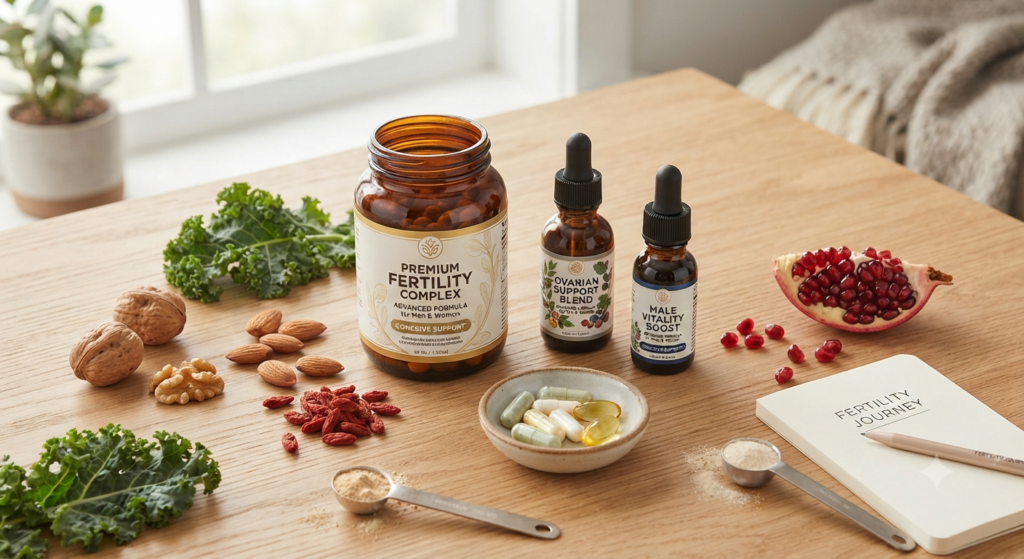
If you’re trying to conceive, you may be wondering whether fertility supplements can support your reproductive health and improve your chances of pregnancy. With so many fertility vitamins and supplements available, it can be difficult to know which ones are actually worth considering.
Some nutrients are essential before and during early pregnancy, while others have been studied for their potential role in egg quality, ovulation, or reproductive health. However, not every supplement marketed for fertility has strong evidence behind it.
In this guide, we’ll look at some of the best fertility supplements for women, what the research says, and what to consider before adding a supplement to your routine.
Can Fertility Supplements Improve Your Chances of Getting Pregnant?
Fertility supplements may help correct nutritional deficiencies and support overall reproductive health, but they are not a guaranteed way to increase your chances of pregnancy.
According to the American Society for Reproductive Medicine, there is limited evidence that specific dietary patterns, antioxidants, or herbal remedies improve natural fertility in women who do not have ovulatory dysfunction. However, folic acid supplementation is specifically recommended for women trying to conceive because of its role in reducing the risk of neural tube defects.
This means it’s important to distinguish between supporting nutritional health before pregnancy and taking a supplement specifically to treat infertility.
- Folic Acid
Folic acid is one of the most important supplements to take when you’re trying to conceive.
It is a B vitamin that plays an essential role in cell division and early fetal development. Taking folic acid before conception and during early pregnancy helps reduce the risk of neural tube defects.
For women at average risk, major professional organizations recommend 400 micrograms (mcg) of folic acid daily. Ideally, supplementation should begin before pregnancy because neural tube development occurs very early in pregnancy.
Why consider folic acid?
- Supports early fetal development
- Helps prevent neural tube defects
- Important before conception as well as during early pregnancy
- Commonly included in prenatal vitamins
Folic acid should be considered a preconception essential, rather than simply a fertility booster.
- Prenatal Vitamins
A good prenatal vitamin can be one of the simplest ways to cover important nutritional needs when you’re trying to conceive.
Depending on the formulation, prenatal vitamins may contain nutrients such as:
- Folic acid
- Iron
- Vitamin D
- Vitamin B12
- Iodine
- Other essential vitamins and minerals
ACOG recommends that women preparing for pregnancy take a prenatal vitamin containing at least 400 mcg of folic acid.
However, more is not always better. Some nutrients, particularly vitamin A, can be harmful at excessive doses. It’s important to check the label and discuss the appropriate prenatal supplement with your healthcare provider.
- Vitamin D
Vitamin D is another nutrient worth paying attention to before pregnancy.
Vitamin D is involved in bone health, immune function, and several reproductive processes. However, having adequate vitamin D is different from taking high-dose vitamin D specifically to increase fertility.
If you have a vitamin D deficiency, your healthcare provider may recommend supplementation based on your blood level and individual needs.
The goal should be to correct deficiency safely rather than assuming that higher doses will automatically improve fertility.
- Iron
Iron is important for healthy red blood cell production and oxygen delivery throughout the body.
Iron needs increase during pregnancy, and some women enter pregnancy with low iron stores, particularly those with heavy menstrual bleeding or an iron-deficient diet.
However, iron supplementation is not automatically necessary for everyone trying to conceive. Taking unnecessary high-dose iron can cause side effects and may not provide additional fertility benefits.
If you suspect low iron, ask your healthcare provider whether testing your hemoglobin and iron stores, such as ferritin, is appropriate.
- Vitamin B12
Vitamin B12 plays an important role in red blood cell production, DNA synthesis, and nervous system function.
Women following vegetarian or vegan diets may be more likely to have inadequate B12 intake and may need supplementation.
Because nutritional requirements change around pregnancy, it’s worth reviewing your B12 intake with a healthcare professional before conception, particularly if you follow a restrictive diet.
- Iodine
Iodine is essential for thyroid hormone production, which is particularly important before and during pregnancy.
Inadequate iodine intake can affect thyroid function and pregnancy outcomes. For this reason, iodine is commonly included in prenatal supplements.
However, taking additional iodine on top of a prenatal vitamin isn’t necessarily better. Excessive iodine intake can also affect thyroid function.
Choose a prenatal supplement carefully and discuss your individual needs with your healthcare provider.
- CoQ10
Coenzyme Q10, commonly known as CoQ10, is one of the most popular supplements marketed for fertility.
CoQ10 is involved in mitochondrial energy production and has attracted interest because egg cells require substantial amounts of energy.
Some fertility studies have investigated CoQ10, particularly in women undergoing assisted reproductive treatment or those concerned about ovarian aging.
However, the evidence is not strong enough to consider CoQ10 a proven fertility treatment. ASRM experts have noted that evidence supporting CoQ10 for unassisted conception remains limited, and more human research is needed.
So while CoQ10 may be worth discussing with a fertility specialist in certain situations, it shouldn’t be presented as a guaranteed way to improve egg quality or pregnancy rates.
- Omega-3 Fatty Acids
Omega-3 fatty acids are important fats found naturally in foods such as fatty fish, walnuts, and some seeds.
They support general cardiovascular and metabolic health and may play a role in reproductive health.
Some observational research has associated omega-3 intake with reproductive outcomes, but evidence is still insufficient to recommend omega-3 supplements specifically as a fertility treatment for all women.
- Choline
Choline is an essential nutrient involved in cell structure, nervous system function, and early fetal development.
Eggs, meat, dairy products, soy, and some legumes are good dietary sources.
Choline is particularly important once pregnancy occurs, but many prenatal supplements contain little or no choline. This makes it worth checking the nutrition label rather than assuming your prenatal contains everything you need.
- Magnesium
Magnesium is involved in hundreds of processes in the body, including muscle and nerve function and energy metabolism.
Although magnesium is important for overall health, there isn’t strong evidence that magnesium supplementation directly improves natural fertility in women who aren’t deficient.
Instead of taking magnesium specifically as a fertility booster, focus on meeting your nutritional needs through food and supplement only when appropriate.
What About Fertility Supplements for PCOS?
Women with PCOS may encounter supplements marketed specifically for improving ovulation and fertility.
Some supplements, including certain forms of inositol, have been studied in women with PCOS, particularly in relation to metabolic health and ovulation.
However, evidence varies depending on the specific supplement, dose, formulation, and individual circumstances.
If you have PCOS and are trying to conceive, it’s better to discuss supplements with a healthcare professional rather than relying on a fertility supplement blend alone.
What About Antioxidants and Herbal Fertility Supplements?
You’ll find many fertility products containing ingredients such as:
- CoQ10
- Vitamin E
- Vitamin C
- Selenium
- Zinc
- Herbal extracts
- Maca
- Other antioxidant compounds
The problem is that “natural” does not automatically mean effective or safe.
Some herbal products may also interact with medications or have limited safety data during pregnancy.
If you’re actively trying to conceive, it’s especially important to review herbal supplements with your healthcare provider.
How to Choose the Best Fertility Supplement
Instead of choosing a supplement based only on the words “fertility support” on the label, consider the following:
- Start With Your Nutritional Needs
A prenatal vitamin can provide a foundation of essential nutrients before pregnancy.
- Check the Dosages
More isn’t necessarily better. Avoid combining several supplements that contain the same vitamins and minerals unless your healthcare provider recommends it.
- Look for Transparent Labels
Choose products that clearly list the ingredients and amounts rather than relying on proprietary blends.
- Consider Your Diet
Your diet may already provide significant amounts of nutrients such as iron, B12, iodine, and omega-3s.
- Consider Testing When Appropriate
If you have symptoms or risk factors for a deficiency, testing can help determine whether supplementation is actually needed.
- Review Supplements Before Pregnancy
Not every supplement is appropriate during pregnancy. ACOG recommends reviewing prescription medications, over-the-counter products, and nutritional or herbal supplements during preconception care. (ASRM)
Should You Take More Than One Fertility Supplement?
Usually, you don’t need to take a large number of separate supplements.
A well-formulated prenatal vitamin can provide many of the nutrients needed before and during pregnancy. Additional supplements should be based on your diet, laboratory results, medical history, and advice from your healthcare provider.
Taking multiple products can also increase the risk of accidentally exceeding recommended amounts of certain nutrients.
When Should You Start Taking Fertility Supplements?
If you’re planning to become pregnant, it’s a good idea to start preparing before you begin trying.
Folic acid is particularly important because early fetal development occurs before many women know they are pregnant. ACOG recommends at least 400 mcg of folic acid daily for women who may become pregnant. (ACOG)
Other supplements should depend on your individual nutritional needs rather than being taken simply because you’re trying to conceive.