
If you’re trying to conceive, identifying your fertile window is one of the most important steps you can take. Today, there are two popular tools that help women predict ovulation: ovulation tests and fertility monitors.
While both are designed to help you determine the best days to have intercourse for pregnancy, they work differently and offer different levels of information. Understanding the differences can help you choose the option that best fits your needs, lifestyle, and fertility goals.
What Are Ovulation Tests?
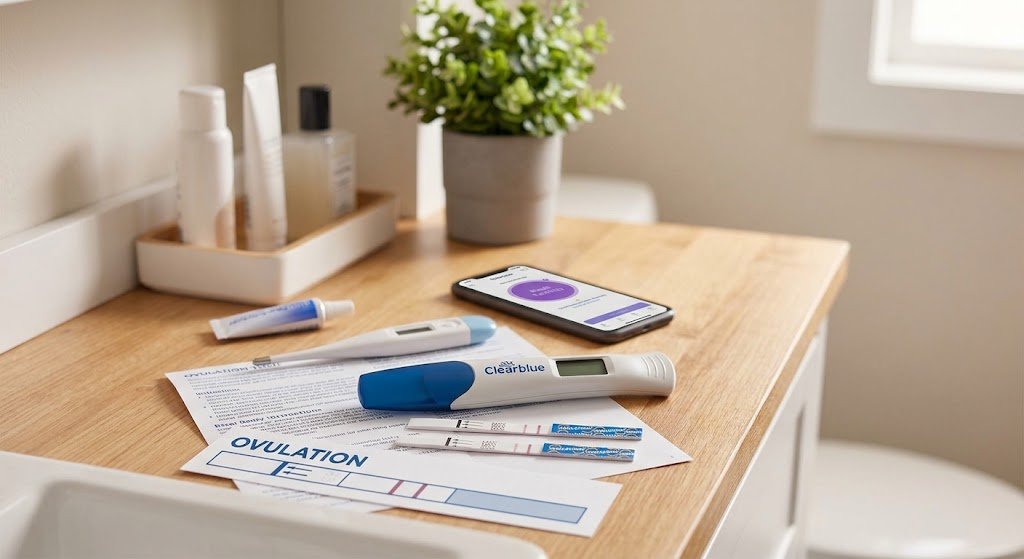
Ovulation tests, also known as Ovulation Predictor Kits (OPKs), are at-home tests that detect the luteinizing hormone (LH) in urine.
LH levels rise sharply about 24 to 36 hours before ovulation. This rise, known as the LH surge, signals that an egg is about to be released from the ovary.
When an ovulation test shows a positive result, it means your most fertile days are likely occurring within the next one to two days.
Advantages of Ovulation Tests
- Affordable and widely available
- Easy to use at home
- Help identify the LH surge before ovulation
- Useful for women with regular menstrual cycles
- Available in both strip and digital formats
Limitations of Ovulation Tests
- Usually detect only LH levels
- Provide a short fertility window
- Require daily testing around ovulation
- May be less reliable for women with PCOS or hormonal imbalances
- Do not confirm that ovulation actually occurred
What Are Fertility Monitors?
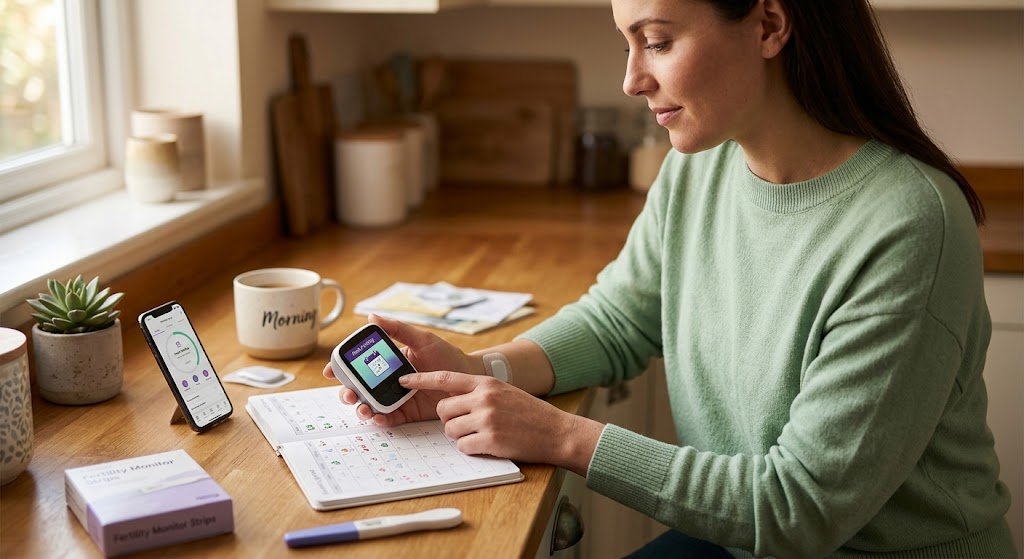
Fertility monitors are more advanced devices designed to track fertility hormones throughout the menstrual cycle.
Unlike standard ovulation tests, many fertility monitors measure multiple hormones, such as:
- Luteinizing hormone (LH)
- Estrogen metabolites
- Other fertility-related biomarkers depending on the device
By analyzing hormonal patterns, fertility monitors can identify not only peak fertility but also the days leading up to ovulation.
This often provides a broader fertile window and more detailed cycle insights.
Advantages of Fertility Monitors
- Earlier Fertility Detection
- Many fertility monitors detect rising estrogen levels before the LH surge occurs, giving you additional fertile days to plan intercourse.
- More Comprehensive Tracking
- Instead of providing a simple positive or negative result, fertility monitors offer detailed information about your hormonal patterns and fertile window.
- Useful for Irregular Cycles
- Women with irregular menstrual cycles may benefit from fertility monitors because they can track fertility changes throughout the cycle rather than relying on a single hormone surge.
- Data Storage and Trend Analysis
- Many modern fertility monitors connect to smartphone apps, allowing users to monitor cycle patterns over time and identify trends.
Limitations of Fertility Monitors
- Higher upfront cost
- May require specific test sticks or subscriptions
- Learning curve for new users
- Some devices require daily measurements at the same time each day
Ovulation Tests vs. Fertility Monitors: Key Differences
| Feature | Ovulation tests | Fertility monitors |
|---|---|---|
| Hormones measured | Usually LH only | Multiple hormones |
| Cost | Lower | Higher |
| Fertility Window | Shorter | Broader |
| Cycle Insights | Limited | Detailed |
| Ease of Use | Simple | Moderate |
| Best for Regular Cycles | Yes | Yes |
| Best for Irregular Cycles | Sometimes | Often |
| Long-Term Tracking | Limited | Excellent |
Which Option Is More Accurate?
Neither option is perfect, but fertility monitors often provide a more complete picture of fertility because they track hormonal changes throughout the cycle.
Ovulation tests are highly effective at detecting the LH surge, but they typically offer only a snapshot of fertility.
For women with regular cycles who want a simple and affordable option, ovulation tests may be sufficient.
For women who have irregular periods, are actively trying to conceive, or want more detailed fertility information, a fertility monitor may be worth the investment.
Who Should Choose Ovulation Tests?
Ovulation tests may be a good choice if you:
- Have regular menstrual cycles
- Are new to fertility tracking
- Want a low-cost option
- Prefer a simple testing method
- Need only basic ovulation prediction
Who Should Choose a Fertility Monitor?
A fertility monitor may be a better choice if you:
- Have irregular cycles
- Have been trying to conceive for several months
- Want advanced fertility insights
- Prefer digital tracking and cycle analysis
- Are interested in monitoring hormonal patterns over time
Can You Use Both Together?
Yes. Some women choose to use both fertility monitors and ovulation tests.
For example, a fertility monitor can help identify the beginning of the fertile window, while ovulation tests can confirm the LH surge and pinpoint peak fertility days.
Using both tools may provide greater confidence when timing intercourse for conception.