
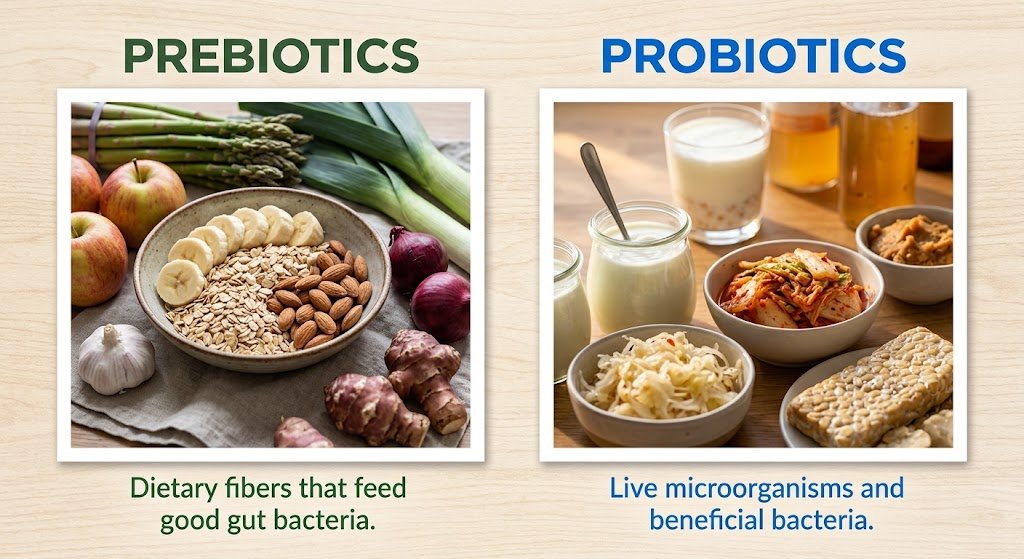
If you’ve been exploring ways to improve your gut health, you’ve probably come across the terms prebiotics and probiotics. While they sound similar, they serve different roles in supporting a healthy digestive system. Understanding the difference between prebiotics and probiotics can help you make better choices for your gut, overall health, and well-being.
In this guide, we’ll explain what prebiotics and probiotics are, how they work, their benefits, food sources, and whether you need one or both.
What Are Probiotics?
Probiotics are live microorganisms, often called “good” or “beneficial” bacteria, that can provide health benefits when consumed in adequate amounts.
Your digestive tract naturally contains trillions of bacteria and other microorganisms that make up the gut microbiome. Probiotics help maintain a healthy balance of these microbes and support digestive function.
Common Probiotic Strains
Some of the most researched probiotic strains include:
- Lactobacillus species
- Bifidobacterium species
- Saccharomyces boulardii
- Lactococcus species
- Streptococcus thermophilus
Benefits of Probiotics
Research suggests that probiotics may help:
- Support digestive health
- Improve gut microbiome balance
- Reduce antibiotic-associated diarrhea
- Support immune function
- Ease symptoms of irritable bowel syndrome (IBS)
- Improve lactose digestion in some individuals
- Support vaginal health in women
Food Sources of Probiotics
Natural probiotic-rich foods include:
- Yogurt with live cultures
- Kefir
- Sauerkraut
- Kimchi
- Miso
- Tempeh
- Kombucha
What Are Prebiotics?
Prebiotics are types of dietary fiber that feed the beneficial bacteria already living in your gut.
Unlike probiotics, prebiotics are not living organisms. Instead, they serve as food for healthy gut bacteria, helping them grow and thrive.
When beneficial bacteria ferment prebiotic fibers, they produce short-chain fatty acids (SCFAs), which support gut health and may benefit overall wellness.
Common Types of Prebiotics
Examples include:
- Inulin
- Fructooligosaccharides (FOS)
- Galactooligosaccharides (GOS)
- Resistant starch
Benefits of Prebiotics
Prebiotics may help:
- Nourish beneficial gut bacteria
- Improve digestive health
- Support regular bowel movements
- Enhance mineral absorption
- Promote gut barrier function
- Support immune health
- Help maintain a balanced microbiome
Food Sources of Prebiotics
Prebiotics are naturally found in many plant foods, including:
- Garlic
- Onions
- Leeks
- Asparagus
- Bananas
- Chicory root
- Jerusalem artichokes
- Oats
- Apples
- Legumes
Prebiotics vs. Probiotics: Key Differences
| Feature | Prebiotics | Probiotics |
|---|---|---|
| what are they? | fibers that feed beneficial bacteria | live beneficial microorganisms |
| Function | Nourish existing gut bacteria | Add beneficial bacteria to the gut |
| Found in | Fiber-rich plant foods | Fermented foods and supplements |
| Survival in gut | Not affected by stomach acid | Some strains may be affected by stomach acid |
| Main role | Support growth of good bacteria | Increase beneficial bacteria populations |
Which Is Better: Prebiotics or Probiotics?
The answer is neither is necessarily better. They work together.
Think of probiotics as the seeds and prebiotics as the fertilizer. Probiotics introduce beneficial microorganisms, while prebiotics help those microorganisms grow and flourish.
For many people, combining both may provide greater benefits than using either one alone.
What Are Synbiotics?
Synbiotics are products or foods that combine both prebiotics and probiotics.
The goal is to provide beneficial bacteria while also supplying the nutrients those bacteria need to survive and multiply.
Examples include:
- Yogurt with added inulin
- Certain probiotic supplements that contain prebiotic fibers
- Fermented foods consumed alongside fiber-rich fruits and vegetables
Do You Need a Supplement?
Many healthy individuals can obtain both prebiotics and probiotics through a balanced diet.
However, supplements may be considered in certain situations, such as:
- After antibiotic use
- During periods of digestive imbalance
- For individuals with limited dietary variety
- Under the guidance of a healthcare professional
It’s important to remember that not all probiotic supplements are the same. Different strains have different effects, and the best choice depends on your individual health needs.
Can Prebiotics Cause Digestive Symptoms?
Yes. Some people may experience:
- Bloating
- Gas
- Abdominal discomfort
This is especially common when increasing fiber intake too quickly. Starting with small amounts and gradually increasing intake may help minimize symptoms.
Individuals with IBS or certain digestive sensitivities may need to choose prebiotic foods carefully.
Practical Tips for Supporting Gut Health
To support a healthy gut microbiome:
- Eat a variety of fruits and vegetables.
- Include fermented foods regularly.
- Increase fiber intake gradually.
- Stay hydrated.
- Exercise regularly.
- Limit highly processed foods when possible.
- Manage stress and prioritize sleep.