
Many women experience physical or emotional symptoms before their period. Mood swings, bloating, fatigue, and food cravings are often considered a normal part of the menstrual cycle. However, for some women, these symptoms become so severe that they interfere with work, relationships, and daily life.
This is where the difference between Premenstrual Syndrome (PMS) and Premenstrual Dysphoric Disorder (PMDD) becomes important.
While PMDD and PMS share many symptoms, PMDD is a much more severe condition that can significantly affect mental health and quality of life.
In this guide, we’ll compare PMDD vs PMS, explore their symptoms, causes, and treatment options, and help you understand when it’s time to seek professional support.
What Is PMS?
Premenstrual Syndrome (PMS) is a group of physical, emotional, and behavioral symptoms that occur during the luteal phase of the menstrual cycle, usually 1–2 weeks before a period begins.
Common PMS symptoms include:
- Bloating
- Breast tenderness
- Fatigue
- Headaches
- Mood swings
- Irritability
- Food cravings
- Difficulty sleeping
Symptoms usually improve within a few days after menstruation starts.
What Is PMDD?
Premenstrual Dysphoric Disorder (PMDD) is a severe form of premenstrual symptoms that primarily affects emotional and psychological well-being.
PMDD is recognized as a medical condition and can have a major impact on daily functioning.
Women with PMDD often experience intense mood-related symptoms that improve shortly after their period begins.
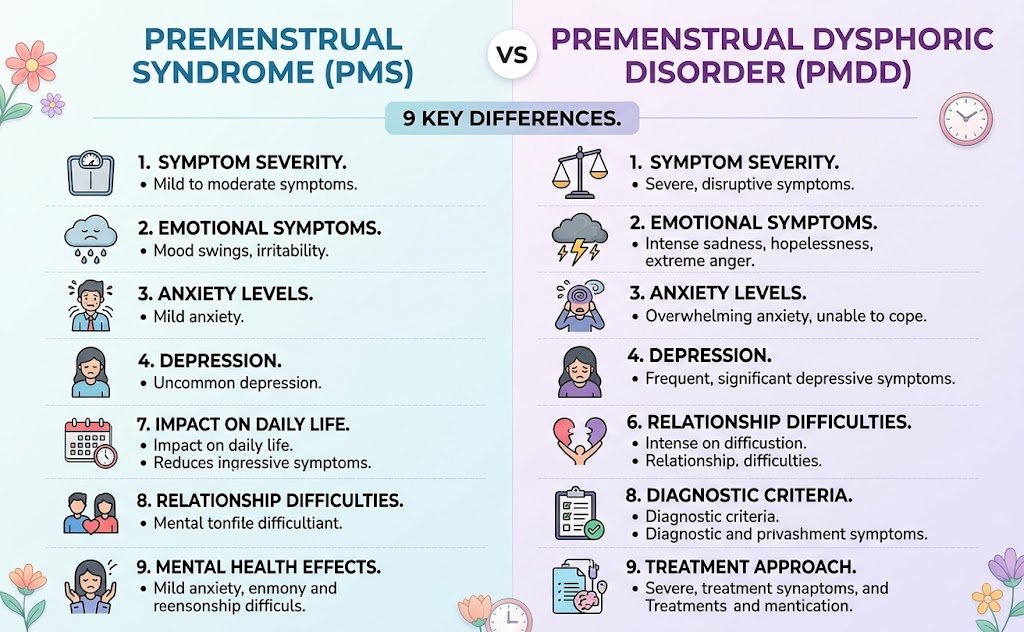
PMDD vs PMS: 9 Key Differences
1. Symptom Severity
PMS symptoms are generally mild to moderate.
PMDD symptoms are severe enough to disrupt work, relationships, social activities, and daily responsibilities.
2. Emotional Symptoms
Both conditions can cause mood changes. However, PMDD is more likely to cause:
- Intense sadness
- Feelings of hopelessness
- Severe irritability
- Anger outbursts
- Emotional sensitivity
3. Anxiety Levels
Mild anxiety can occur with PMS.
PMDD often causes overwhelming anxiety, tension, or feelings of being unable to cope.
4. Depression Symptoms
Depression is uncommon in typical PMS.
PMDD frequently includes depressive symptoms that can significantly affect quality of life.
5. Impact on Daily Life
Many women can continue normal activities with PMS.
PMDD often interferes with work performance, family responsibilities, and personal relationships.
6. Relationship Difficulties
PMDD can increase conflict, social withdrawal, and emotional distress in relationships.
This is less common with standard PMS.
7. Mental Health Effects
PMDD has a stronger connection to mood disorders and emotional distress than PMS.
Women with PMDD may feel like they become a different person during the days before their period.
8. Diagnostic Criteria
PMS does not have strict diagnostic requirements.
PMDD requires specific symptoms that occur during most menstrual cycles and follow a predictable pattern related to the menstrual cycle.
9. Treatment Approach
Lifestyle changes may be enough for many women with PMS.
PMDD often requires a more comprehensive treatment plan that may include therapy, medication, hormonal treatments, or a combination of approaches.
Symptoms of PMS vs PMDD
| symptom | PMS | PMDD |
|---|---|---|
| Bloating | Common | Common |
| Breast tenderness | Common | Common |
| Fatigue | Common | Common |
| Mood swings | Common | Severe |
| Irritability | Mild to moderate | Severe |
| Anxiety | Mild | Significant |
| Depression | Occasional | Common |
| Daily life disruption | Usually mild | Significant |
| Relationship problems | Less common | Common |
What Causes PMS and PMDD?
Researchers do not believe PMS or PMDD are caused by abnormal hormone levels alone.
Instead, symptoms appear to be related to how the brain responds to the normal hormonal fluctuations that occur during the menstrual cycle.
Potential contributing factors include:
- Changes in estrogen and progesterone
- Serotonin sensitivity
- Stress
- Sleep disturbances
- Genetic factors
- Existing mood disorders
Risk Factors for PMDD
Certain factors may increase the likelihood of PMDD:
- Family history of PMDD
- Personal history of depression
- Anxiety disorders
- Chronic stress
- Previous mood disorders
How Is PMDD Diagnosed?
There is no single blood test that can diagnose PMDD.
Healthcare providers typically ask women to track symptoms for at least two menstrual cycles.
A symptom diary can help identify whether symptoms consistently occur during the luteal phase and improve after menstruation begins.
Treatment Options for PMS
Many women find relief through:
- Regular exercise
- Stress management
- Improved sleep habits
- Limiting excess caffeine and alcohol
- Balanced nutrition
Some women may also benefit from hormonal contraceptives or other medical treatments recommended by their healthcare provider.
Treatment Options for PMDD
Treatment may include:
- Cognitive behavioral therapy (CBT)
- Selective serotonin reuptake inhibitors (SSRIs)
- Hormonal contraceptives
- Lifestyle modifications
- Stress-reduction techniques
- Nutritional support
The most effective treatment plan depends on individual symptoms and medical history.
When Should You Talk to a Healthcare Provider?
Consider seeking professional advice if:
- Symptoms affect your work or relationships
- You experience severe anxiety or depression before your period
- Lifestyle changes are not helping
- You feel unable to manage symptoms on your own
Early diagnosis can help women access effective treatment and improve their quality of life.
Final Thoughts
Understanding the difference between PMDD and PMS is important because the two conditions are not simply different levels of the same experience. While PMS can be uncomfortable, PMDD is a serious health condition that can significantly affect emotional well-being and daily functioning.
If your symptoms feel overwhelming or interfere with everyday life, tracking your cycle and discussing your symptoms with a healthcare provider can be an important first step toward finding relief.