
B vitamins are a group of essential nutrients that help your body produce energy, support brain function, maintain healthy skin, and promote overall well-being. Unlike fat-soluble vitamins, B vitamins are water-soluble, meaning your body does not store large amounts of them and needs a regular supply through food or supplements.
Each B vitamin has a unique role, but they often work together to support important functions throughout the body.
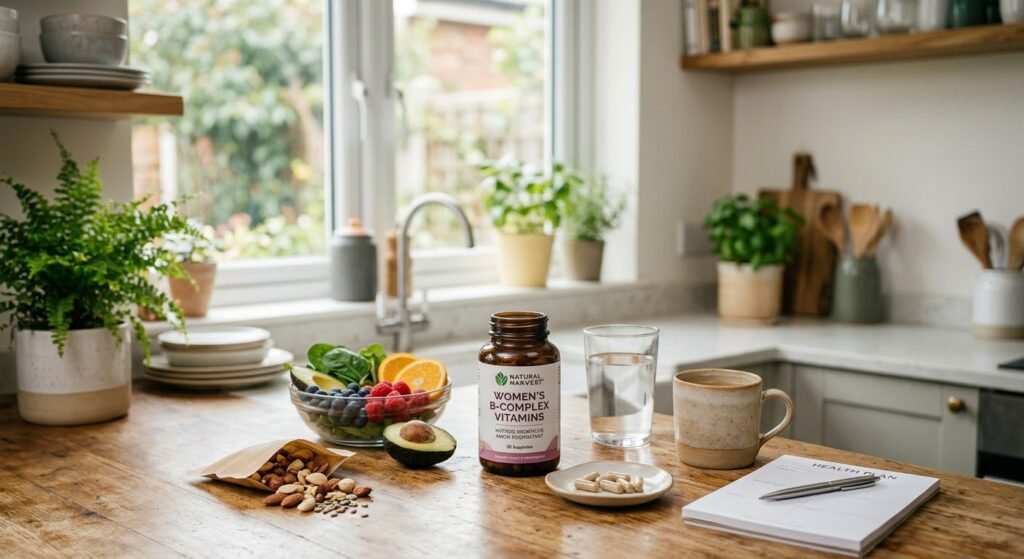
What Are B Vitamins?
The B-complex family consists of eight different vitamins:
- Vitamin B1 (Thiamine)
- Vitamin B2 (Riboflavin)
- Vitamin B3 (Niacin)
- Vitamin B5 (Pantothenic Acid)
- Vitamin B6 (Pyridoxine)
- Vitamin B7 (Biotin)
- Vitamin B9 (Folate)
- Vitamin B12 (Cobalamin)
Together, these vitamins help convert food into energy, support the nervous system, and contribute to healthy cell growth and repair.
Vitamin B1 (Thiamine)
What It Does
Thiamine helps the body convert carbohydrates into energy and supports normal nerve function.
Food Sources
- Whole grains
- Legumes
- Nuts and seeds
- Pork
Deficiency Signs
- Fatigue
- Irritability
- Muscle weakness
- Nerve-related symptoms
Vitamin B2 (Riboflavin)
What It Does
Riboflavin supports energy production, healthy skin, and eye health.
Food Sources
- Dairy products
- Eggs
- Lean meats
- Almonds
Deficiency Signs
- Cracked lips
- Sore throat
- Skin irritation
- Eye sensitivity
Vitamin B3 (Niacin)
What It Does
Niacin helps support metabolism, skin health, and nervous system function.
Food Sources
- Chicken
- Tuna
- Turkey
- Peanuts
Deficiency Signs
- Fatigue
- Skin problems
- Digestive discomfort
- Poor concentration
Vitamin B5 (Pantothenic Acid)
What It Does
Vitamin B5 is involved in hormone production and energy metabolism.
Food Sources
- Mushrooms
- Chicken
- Avocados
- Whole grains
Deficiency Signs
Deficiency is uncommon but may cause:
- Fatigue
- Headaches
- Irritability
Vitamin B6 (Pyridoxine)
What It Does
Vitamin B6 supports brain health, immune function, and the production of neurotransmitters.
Food Sources
- Poultry
- Fish
- Potatoes
- Bananas
Deficiency Signs
- Mood changes
- Fatigue
- Skin rashes
- Weakened immunity
Vitamin B7 (Biotin)
What It Does
Biotin is often associated with healthy hair, skin, and nails.
Food Sources
- Eggs
- Nuts
- Seeds
- Sweet potatoes
Deficiency Signs
- Hair thinning
- Brittle nails
- Skin rashes
- Fatigue
Vitamin B9 (Folate)
What It Does
Folate is essential for DNA production and cell growth. It is especially important during pregnancy because it supports healthy fetal development.
Food Sources
- Leafy green vegetables
- Lentils
- Beans
- Citrus fruits
Deficiency Signs
- Fatigue
- Weakness
- Pale skin
- Certain types of anemia
Vitamin B12 (Cobalamin)
What It Does
Vitamin B12 supports red blood cell production, nerve function, and DNA synthesis.
Food Sources
- Meat
- Fish
- Eggs
- Dairy products
Deficiency Signs
- Fatigue
- Memory difficulties
- Numbness or tingling in the hands and feet
- Weakness
- Megaloblastic anemia
Why B Vitamins Are Important for Women
Women may have increased needs for certain B vitamins during different stages of life.
B vitamins support:
- Energy production
- Healthy pregnancy
- Brain function
- Nervous system health
- Healthy hair and skin
- Red blood cell formation
Folate is particularly important before and during pregnancy, while vitamin B12 is essential for maintaining healthy nerve function and preventing anemia.
Can You Get Enough B Vitamins From Food?
Most people can obtain adequate amounts of B vitamins through a balanced diet that includes:
- Lean proteins
- Whole grains
- Eggs
- Dairy products
- Fruits
- Vegetables
- Legumes
However, some individuals, including vegetarians, vegans, older adults, and people with certain digestive conditions, may be at greater risk of deficiencies.
Should You Take a B-Complex Supplement?
A B-complex supplement may be helpful for people who have dietary restrictions or confirmed deficiencies. However, supplements should not replace a healthy diet.
B vitamins play a vital role in nearly every aspect of health, from energy production and brain function to healthy skin, hair, and red blood cell formation. Because each B vitamin serves a unique purpose, eating a varied and nutrient-rich diet is the best way to support optimal health.
Understanding the different types of B vitamins and recognizing the signs of deficiency can help you make informed decisions about your nutrition and overall well-being.