
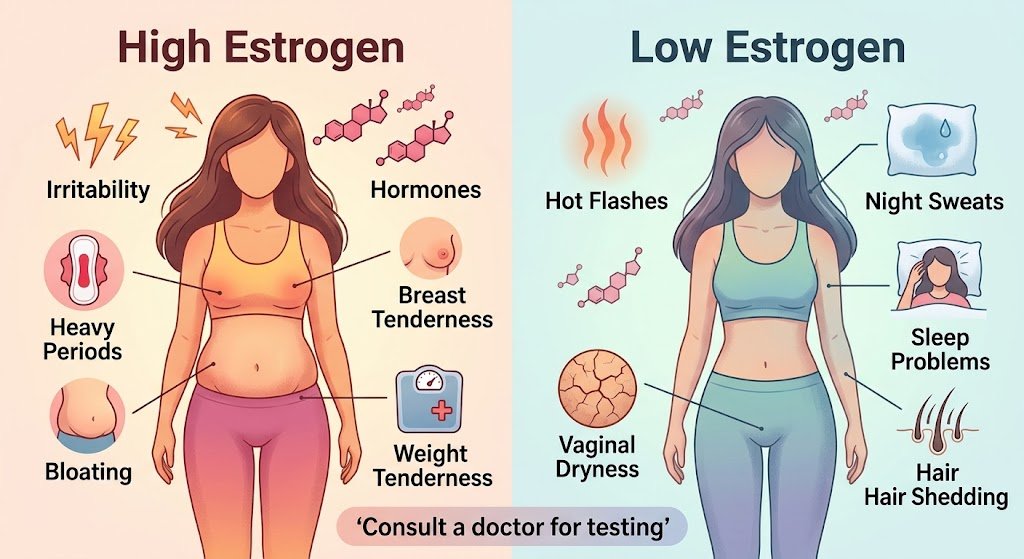
Estrogen is one of the most important hormones in a woman’s body. It plays a major role in reproductive health, menstrual cycles, bone strength, mood, skin health, and even heart function. When estrogen levels become too high or too low, a woman may experience a wide range of symptoms. The challenge is that some symptoms can overlap, making it difficult to know whether estrogen is high or low.
In this guide, we’ll explain the differences between high estrogen and low estrogen, common symptoms, possible causes, and when to seek medical advice.
What Is Estrogen?
Estrogen is a group of hormones primarily produced by the ovaries. It helps regulate:
- The menstrual cycle
- Ovulation and fertility
- Bone health
- Skin elasticity
- Mood and cognitive function
- Vaginal health
- Heart and blood vessel function
Estrogen levels naturally fluctuate throughout the menstrual cycle and change during pregnancy, postpartum recovery, and menopause.
What Happens When Estrogen Is Too High?
High estrogen, sometimes called estrogen dominance, occurs when estrogen levels are elevated or when estrogen is high relative to progesterone.
Common Symptoms of High Estrogen
Women with high estrogen may experience:
- Heavy or prolonged periods
- Breast tenderness
- Bloating and water retention
- Weight gain, especially around the hips and thighs
- Mood swings
- Irritability
- Headaches or migraines
- Fatigue
- Decreased libido
- Worsening PMS symptoms
Some women may also notice increased symptoms before their period due to hormonal fluctuations.
Causes of High Estrogen
Several factors may contribute to elevated estrogen levels:
- Excess body fat
- Chronic stress
- Certain medications
- Hormonal birth control
- Polycystic ovary syndrome (PCOS)
- Liver dysfunction
- Perimenopause hormone fluctuations
Because fat tissue can produce estrogen, carrying excess weight may contribute to higher estrogen levels in some women.
What Happens When Estrogen Is Too Low?
Low estrogen occurs when the body does not produce enough estrogen to support normal functions.
This commonly happens during menopause but can also affect younger women.
Common Symptoms of Low Estrogen
Signs of low estrogen may include:
- Irregular or missed periods
- Vaginal dryness
- Pain during intercourse
- Hot flashes
- Night sweats
- Difficulty sleeping
- Mood changes
- Anxiety
- Reduced sex drive
- Dry skin
- Joint discomfort
- Increased hair shedding
Long-term low estrogen may also affect bone density.
Causes of Low Estrogen
Potential causes include:
- Perimenopause and menopause
- Excessive exercise
- Chronic dieting or very low calorie intake
- Significant weight loss
- Ovarian disorders
- Pituitary gland conditions
- Certain medications
- Primary ovarian insufficiency
Women who consume too few calories for long periods may experience hormone disruptions that affect estrogen production.
High Estrogen vs Low Estrogen: Key Differences
| Symptom | High estrogen | Low estrogen |
|---|---|---|
| Heavy periods | Common | Less common |
| missed periods | Sometimes | Common |
| Breast tenderness | Common | Uncommon |
| Bloating | Common | Less common |
| Hot flashes | Rare | Common |
| Vaginal dryness | Rare | Common |
| Weight gain | More common | Possible |
| Night sweats | Rare | Common |
| Hair shedding | Possible | Common |
| Sleep problems | Possible | Common |
While these symptoms can provide clues, blood tests and medical evaluation are often needed to identify the true cause.
How to Know If Your Estrogen Is High or Low
Symptoms alone cannot always determine estrogen status.
A healthcare professional may recommend:
- Estradiol (E2) testing
- Progesterone testing
- FSH and LH testing
- Thyroid function tests
- Additional hormone evaluations when needed
Test timing matters because estrogen changes significantly throughout the menstrual cycle.
Supporting Healthy Estrogen Balance
Healthy lifestyle habits can support hormone balance:
Prioritize Sleep
Aim for 7–9 hours of quality sleep each night. Poor sleep can disrupt hormone regulation and increase stress hormone levels.
Eat a Nutrient-Dense Diet
Focus on:
- Vegetables
- Fruits
- Lean proteins
- Healthy fats
- High-fiber foods
Manage Stress
Chronic stress may influence hormone balance. Consider activities such as:
- Walking
- Yoga
- Meditation
- Deep breathing exercises
Stay Physically Active
Regular exercise supports overall metabolic and hormonal health. However, excessive exercise combined with insufficient calorie intake may contribute to low estrogen.
When to See a Doctor
Seek medical advice if you experience:
- Very heavy periods
- Missing periods for several months
- Severe hot flashes
- Persistent fatigue
- Unexplained weight changes
- Fertility concerns
- Significant mood changes
A healthcare professional can determine whether symptoms are related to estrogen levels or another underlying condition.
Final Thoughts
Both high estrogen and low estrogen can affect how you feel physically and emotionally. While some symptoms overlap, signs such as heavy periods, bloating, and breast tenderness are more commonly linked to high estrogen, whereas hot flashes, vaginal dryness, and missed periods are more often associated with low estrogen.
If you’re struggling with symptoms that suggest a hormonal imbalance, proper testing and professional guidance can help identify the cause and create an appropriate treatment plan.