
Noticing more hair than usual in your brush, shower drain, or on your pillow can be worrying. If you’ve been asking yourself, “Why am I losing hair?”, you’re not alone. Hair shedding is common, but noticeable thinning can sometimes indicate an underlying health issue.
The good news is that many causes of hair loss are manageable once the underlying problem is identified.
In this guide, we’ll explore 10 common causes of hair loss in women, how to recognize possible warning signs, and what you can do to support healthier hair growth.
Is It Normal to Lose Hair Every Day?
Yes. Losing approximately 50–100 hairs a day is generally considered normal. Hair naturally moves through growth, transition, and resting phases, so some shedding is expected.
However, you may be experiencing excessive hair loss if you notice:
- More hair falling out than usual when washing or brushing.
- A wider part or a thinner-looking ponytail.
- Visible patches of missing hair.
- Gradual thinning across your scalp.
- Hair loss accompanied by scalp itching, redness, or pain.
The pattern and duration of your hair loss can provide useful clues about its cause.
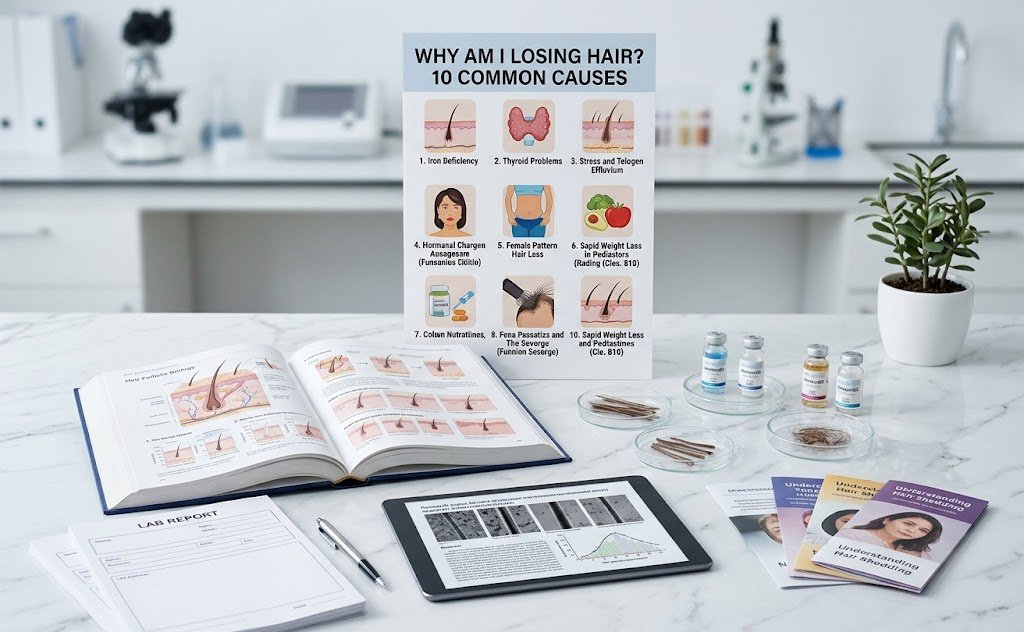
10 Common Causes of Hair Loss in Women
- Iron Deficiency
Iron deficiency is an important potential cause of hair shedding, particularly in women who experience heavy menstrual bleeding or have low iron stores.
Iron helps your body produce hemoglobin, which carries oxygen in the blood. Low iron levels can affect normal body functions, and iron deficiency may contribute to hair loss in some women.
You may also experience fatigue, weakness, headaches, dizziness, or pale skin, although symptoms vary.
What can you do?
A healthcare professional may recommend a complete blood count (CBC) and ferritin test to assess your iron status. If a deficiency is confirmed, treating it can help address a contributing cause of hair loss.
Avoid taking high-dose iron supplements without appropriate assessment and medical guidance.
- Thyroid Problems
Both an underactive thyroid (hypothyroidism) and an overactive thyroid (hyperthyroidism) can affect the hair growth cycle.
Other possible symptoms include:
- Unexplained weight changes.
- Changes in energy levels.
- Feeling unusually cold or hot.
- Changes in bowel habits.
- Menstrual irregularities.
- Dry skin or changes in hair texture.
What can you do?
If thyroid disease is suspected, your clinician may recommend thyroid function tests, such as TSH and, when appropriate, free T4. Treating the underlying thyroid problem may help improve hair growth over time.
- Stress and Telogen Effluvium
Significant physical or emotional stress can trigger a temporary form of hair shedding called telogen effluvium.
Possible triggers include severe illness, high fever, surgery, childbirth, major emotional distress, rapid weight loss, or substantial dietary restriction.
One important clue is timing: increased shedding often begins around two to three months after the triggering event rather than immediately.
What can you do?
Focus on adequate nutrition, sufficient sleep, manageable exercise, and recovery from the underlying stressor. Hair shedding often improves over several months once the trigger is addressed, although recovery varies.
Persistent or severe shedding deserves medical evaluation rather than being automatically attributed to stress.
- Hormonal Changes
Hormonal changes can influence hair growth and shedding. These may occur after pregnancy, during the postpartum period, around menopause, or in association with certain endocrine conditions.
For example, androgen-related hair thinning may develop gradually, often becoming noticeable as a wider central part or reduced hair density.
Polycystic ovary syndrome (PCOS) can also be associated with scalp hair thinning in some women, especially when androgen levels are elevated.
What can you do?
Tell your healthcare professional about changes in your menstrual cycle, acne, unwanted facial hair, or other hormonal symptoms. These details may help determine whether hormonal testing is appropriate.
Hair loss alone does not establish a hormonal disorder.
- Female Pattern Hair Loss
Female pattern hair loss is a common cause of progressive thinning in women. It may run in families and can begin in early adulthood, although it becomes more common with age.
Typical signs include:
- A gradually widening part.
- Thinning over the top of the scalp.
- Reduced hair volume.
- A ponytail that becomes noticeably thinner.
Unlike temporary shedding, this condition can progress without treatment.
What can you do?
A dermatologist can assess your scalp and discuss treatments such as topical minoxidil when appropriate. Results take time, and treatment generally needs to be continued to maintain its benefits.
If you are pregnant, planning pregnancy, or breastfeeding, discuss treatment safety with your healthcare professional.
- Rapid Weight Loss or Restrictive Dieting
Your hair needs adequate energy, protein, and essential nutrients to grow normally.
Rapid weight loss, very low-calorie diets, and restrictive eating patterns may trigger increased shedding, particularly when they result in inadequate protein or micronutrient intake.
This can happen even when your body weight remains within a typical range.
What can you do?
Aim for a balanced eating pattern that includes protein-rich foods, vegetables, fruit, whole grains, and healthy fats. If you’re trying to lose weight, avoid unnecessarily aggressive calorie restriction.
A registered dietitian can help you meet your nutritional needs while working toward your weight goals.
- Vitamin and Mineral Deficiencies
In addition to iron deficiency, inadequate intake of certain nutrients may contribute to hair problems.
Potentially relevant nutrients include:
- Zinc.
- Protein.
- Vitamin B12, particularly when deficiency is present.
- Other nutrients in cases of significant dietary restriction or malabsorption.
However, not every case of hair loss is caused by a vitamin deficiency, and taking extra supplements does not automatically improve hair growth.
What can you do?
A clinician can determine whether your history or symptoms suggest a deficiency and recommend targeted testing when appropriate. Supplement only what you need, because excessive intake of some nutrients can be harmful and may itself contribute to hair loss.
- Certain Medications
Some medications can cause hair shedding as a side effect. The likelihood depends on the medication, dose, individual susceptibility, and timing.
If hair loss begins after starting a new medicine or changing its dose, the timing is worth discussing with your prescriber.
What can you do?
Do not stop a prescribed medication on your own. Ask your healthcare professional whether it could be contributing to your symptoms and whether a suitable alternative exists.
- Tight Hairstyles and Hair Damage
Repeated tension from tight ponytails, braids, extensions, or other hairstyles can damage hair follicles over time. This is known as traction alopecia.
Frequent heat styling, chemical treatments, and harsh handling can also cause hair breakage, which may look like hair loss.
Clues include broken hairs, thinning around the hairline, or areas exposed to repeated pulling.
What can you do?
Choose looser hairstyles, reduce repeated tension, handle wet hair gently, and limit excessive heat or damaging chemical treatments. Early traction-related hair loss may improve after the tension stops, but prolonged damage can become permanent.
- Scalp Conditions and Autoimmune Disorders
Some hair loss results from conditions affecting the scalp or hair follicles.
Examples include:
- Alopecia areata: An autoimmune condition that can cause smooth, round patches of hair loss.
- Scalp ringworm: A fungal infection that may cause scaling, broken hairs, and sometimes inflammation.
- Inflammatory or scarring alopecia: Conditions that may damage follicles and cause permanent hair loss if treatment is delayed.
What can you do?
Seek assessment from a dermatologist if you develop bald patches, scalp pain, redness, scaling, pustules, or rapidly progressive thinning. Early diagnosis can be particularly important when inflammation or scarring is suspected.
What Tests Should You Consider for Hair Loss?
There is no single blood test that explains every case of hair loss. The appropriate evaluation depends on your symptoms, medical history, diet, menstrual history, and the pattern of shedding.
Your healthcare professional may consider:
- CBC: To check for anemia and related abnormalities.
- Ferritin: To assess iron stores.
- TSH: To evaluate possible thyroid dysfunction.
- Vitamin B12, zinc, or other nutrient tests: When your history suggests a deficiency.
- Hormonal tests: When hair loss occurs alongside irregular periods, acne, excess facial hair, or other signs of an endocrine problem.
A scalp examination is often just as important as blood tests. Not everyone needs an extensive hormone panel or every available vitamin test.
How Can You Reduce Hair Loss Naturally?
Healthy habits can support normal hair growth, especially when nutritional deficiencies or lifestyle factors contribute to shedding.
Eat Enough Protein
Include foods such as eggs, fish, poultry, beans, lentils, yogurt, or other suitable protein sources.
Avoid Crash Diets
Gradual, sustainable weight loss is generally preferable to extreme calorie restriction that may compromise nutrition.
Treat Confirmed Deficiencies
Correcting an established deficiency may help when it contributes to hair loss. Supplements should not replace evaluation of other possible causes.
Protect Your Hair From Damage
Limit tight hairstyles, excessive heat, and harsh chemical treatments.
Give Hair Time to Recover
Hair growth is slow. Even after the cause of shedding has been addressed, visible improvement may take several months.
Be cautious of products promising rapid regrowth or claiming that one supplement can treat every type of hair loss.
When Should You See a Doctor?
Arrange a medical assessment if hair loss is persistent, worsening, or causing significant distress.
Seek prompt dermatological evaluation if you notice sudden bald patches, scalp pain, significant redness, scaling, or possible scarring.
Hair loss accompanied by irregular periods, unexplained weight changes, or other new symptoms may also warrant evaluation for an underlying condition.
Frequently Asked Questions
Can low ferritin cause hair loss even if my hemoglobin is normal?
Low iron stores may contribute to hair shedding even without anemia in some people. However, the relationship is not straightforward, and low ferritin does not explain every case of hair loss. A healthcare professional can interpret your results in context.
Does stress cause hair loss immediately?
Not usually. Stress-related telogen effluvium commonly becomes noticeable around two to three months after a significant trigger.
Which vitamin is best for hair growth?
There is no single best vitamin for everyone. Correcting a confirmed deficiency may help, but extra supplements are unlikely to solve hair loss when nutrient levels are already adequate.
Can hair grow back after hair loss?
Yes, many forms of hair loss are temporary or treatable. However, regrowth depends on the underlying cause. Conditions that permanently damage hair follicles may not be reversible.
Does washing my hair too often cause hair loss?
Normal washing does not usually cause hair loss from the follicles. It can make already-shed hairs more noticeable, while harsh handling or damaging treatments can contribute to breakage.
Final Thoughts
If you’re wondering why you’re losing hair, start by looking at the pattern of shedding, recent illnesses or stress, dietary changes, medications, and any accompanying symptoms.
Iron deficiency, thyroid problems, hormonal changes, and stress are all possible contributors, but the correct treatment depends on identifying the cause.
Rather than relying on hair supplements alone, seek an appropriate assessment if the problem persists. Finding the underlying reason is the most useful first step toward healthier hair.