
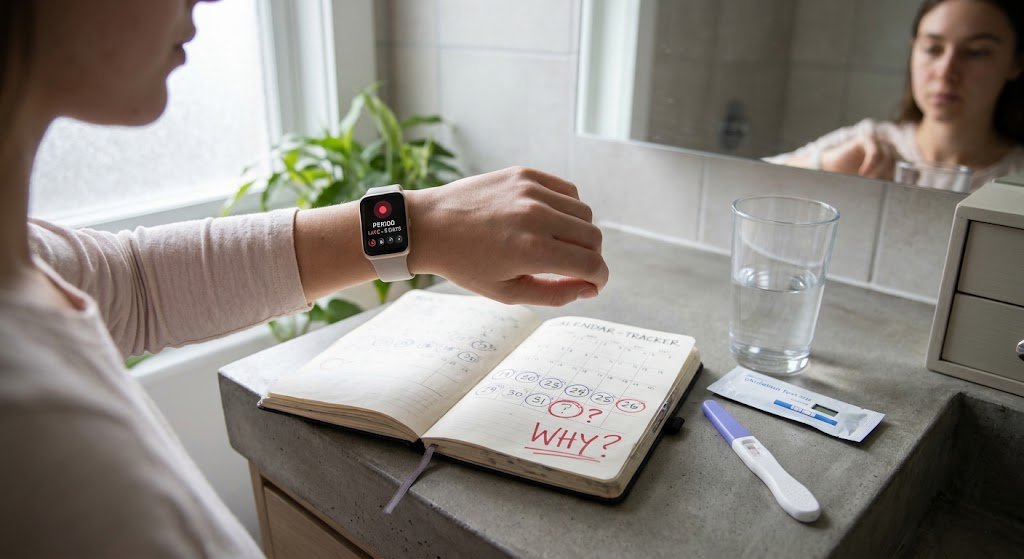
Waiting for your period to arrive can be stressful, especially when a pregnancy test is negative. If you’re asking yourself, “Why is my period late but I’m not pregnant?”, several factors could explain the delay.
Your menstrual cycle depends on a coordinated interaction between the brain, ovaries, and reproductive hormones. Changes in ovulation can shift the date of your period, sometimes by several days or longer.
A late period does not automatically mean something is wrong. However, recurring delays may be a sign that your body needs further evaluation.
In this guide, we’ll explore nine possible causes of a late period when pregnancy is not the explanation, what symptoms to look for, and when to seek medical advice.
How Late Is Too Late for a Period?
A typical menstrual cycle lasts approximately 21–35 days in adults, although individual patterns vary.
Your cycle is counted from the first day of one period to the first day of the next. If your cycles are usually regular and suddenly become longer, the change may be worth paying attention to.
For example, if your period normally arrives every 28–30 days but this month it has not arrived by day 36, you may have ovulated later than usual or not ovulated during that cycle.
One delayed period can occur without a serious underlying problem. Repeated delays, significant changes from your usual pattern, or several missed periods deserve medical attention.
9 Possible Causes of a Late Period When You’re Not Pregnant
- Stress and Anxiety
Stress can affect the hypothalamus, a region of the brain involved in regulating reproductive hormones.
Significant emotional stress, major life changes, disrupted sleep, or physical strain may interfere with the hormonal signals needed for ovulation.
When ovulation occurs later than usual, your period may also arrive later.
What can you do?
Prioritize regular sleep, adequate meals, recovery time, and stress-management strategies that work for you. If your cycle changes persist, do not assume stress is the only explanation.
- Late Ovulation
Late ovulation is one of the most direct explanations for a late period.
Your period generally begins about two weeks after ovulation, although the timing varies. If ovulation occurs later in the cycle, menstruation will usually occur later too.
Possible reasons include stress, illness, changes in energy intake, or normal variation in cycle timing.
You may notice that your usual premenstrual symptoms also appear later than expected.
What can you do?
Track the first day of each period and note changes in cycle length. Ovulation tracking may provide additional information, but calendar predictions alone cannot confirm exactly when you ovulated.
PCOS is a hormonal and metabolic condition that can interfere with regular ovulation.
Women with PCOS may experience:
- Irregular or infrequent periods.
- Acne.
- Increased facial or body hair.
- Thinning hair on the scalp.
- Difficulty conceiving.
Not everyone with PCOS has all these symptoms, and irregular periods alone are not enough to diagnose the condition.
What can you do?
If your periods are frequently delayed, especially alongside signs of excess androgens, speak with a healthcare professional about an appropriate evaluation.
Diagnosis is based on clinical criteria and exclusion of other possible causes; an ultrasound alone does not establish PCOS in every case.
- Thyroid Disorders
Your thyroid helps regulate metabolism and can influence menstrual function.
Both hypothyroidism and hyperthyroidism may lead to changes in cycle length, lighter or heavier bleeding, or missed periods.
Other possible symptoms include fatigue, weight changes, temperature sensitivity, changes in bowel habits, or alterations in hair and skin.
What can you do?
Your clinician may recommend a TSH test and other thyroid tests when appropriate. Treatment depends on the specific thyroid disorder.
- Sudden Weight Loss or Weight Gain
Significant changes in body weight can affect the hormones involved in ovulation.
Rapid weight loss, inadequate calorie intake, or low energy availability may disrupt the signals that regulate your reproductive cycle. Weight gain can also be associated with irregular periods, particularly when insulin resistance or PCOS is present.
You do not have to be underweight for insufficient energy intake or excessive exercise to affect menstruation.
What can you do?
Aim for a balanced diet and sustainable weight-management goals. If your period becomes irregular after a major dietary change or rapid weight loss, discuss it with your healthcare professional.
- Excessive Exercise or Low Energy Availability
Exercise is beneficial for overall health, but intense training combined with insufficient food intake and inadequate recovery can interfere with normal reproductive hormone signaling.
You may notice longer cycles or missed periods after increasing your training volume, restricting calories, or losing weight rapidly.
What can you do?
Review your training intensity, calorie intake, sleep, and recovery. A clinician or registered dietitian can help you determine whether low energy availability may be contributing to menstrual changes.
- Elevated Prolactin Levels
Prolactin is a hormone primarily involved in breast milk production. When levels are elevated outside expected circumstances, they can interfere with reproductive hormone signaling and ovulation.
Possible symptoms include:
- Infrequent or absent periods.
- Milk-like nipple discharge when not breastfeeding.
- Reduced sexual desire.
- Difficulty conceiving.
Some medications and certain pituitary conditions can increase prolactin levels.
What can you do?
If your symptoms suggest elevated prolactin, your clinician may recommend a blood test and investigate possible causes. An abnormal result sometimes needs to be repeated under appropriate testing conditions.
- Perimenopause or Other Changes in Ovarian Function
Perimenopause is the transition leading up to menopause. During this time, ovulation becomes less predictable, and periods may become shorter, longer, lighter, heavier, or occasionally absent.
It most often occurs during the 40s, although timing varies.
In younger women, other conditions affecting ovarian function may also cause missed periods.
What can you do?
Discuss persistent cycle changes with a healthcare professional, particularly if you experience hot flashes, night sweats, vaginal dryness, or other new symptoms. Age, medical history, and the overall symptom pattern help determine which tests may be appropriate.
- Medications and Hormonal Contraception
Some medications and hormonal contraceptives can alter menstrual bleeding or suppress ovulation.
Depending on the method, periods may become lighter, irregular, or absent. Some medicines used for other health conditions can also affect reproductive hormones.
What can you do?
Review your medication and contraception history with your healthcare professional. Do not discontinue prescribed medication or hormonal contraception without discussing the potential consequences.
Can You Be Pregnant Even if Your Test Is Negative?
Yes. A negative pregnancy test does not always exclude pregnancy, particularly if you test too early.
Home pregnancy tests detect human chorionic gonadotropin (hCG), which rises after implantation. If you ovulated later than expected, the test may be negative because it was taken before hCG levels became detectable.
If pregnancy is possible:
- Repeat the test after a few days if your period has not arrived.
- Follow the test instructions carefully.
- If your period remains absent despite negative tests, consult a healthcare professional.
Seek urgent medical attention if you experience severe abdominal or pelvic pain, fainting, significant dizziness, or unusual bleeding when pregnancy is possible. These symptoms can indicate an urgent condition, including ectopic pregnancy, even if you have not had a positive home test.
What Tests Might You Need for a Late Period?
The appropriate evaluation depends on your age, cycle history, symptoms, medications, and the duration of the delay.
A clinician may consider:
- Pregnancy testing: When pregnancy is possible.
- TSH: To assess thyroid function.
- Prolactin: When elevated levels are suspected.
- Androgen testing: If there are signs such as excess facial hair, acne, or scalp hair thinning.
- FSH and estradiol: In selected cases where ovarian function or other hormonal problems need assessment.
- Pelvic ultrasound: When indicated by your symptoms and examination.
Not everyone needs all these tests. The goal is to investigate the most likely causes rather than order every available hormone test.
When Should You See a Doctor About a Late Period?
Arrange a medical appointment if:
- You have missed three consecutive periods.
- Your cycles have become persistently irregular.
- Your period is repeatedly delayed compared with your usual pattern.
- You have unexplained weight changes, excessive facial hair, new acne, or unusual nipple discharge.
- You are trying to conceive and your cycles are irregular.
Seek urgent care for severe pelvic pain, fainting, or other concerning symptoms, especially if pregnancy has not been definitively excluded.
Frequently Asked Questions
Can stress delay my period by a week or more?
Yes. Significant stress can interfere with ovulation, potentially delaying your period by a week or longer. However, repeated delays should not automatically be attributed to stress without considering other causes.
Can I have a late period even if my hormones are normal?
Yes. A single cycle can be longer than usual because ovulation occurred later than expected. Normal results from selected hormone tests do not necessarily explain every cycle variation or exclude every possible condition.
Can low iron delay my period?
Low iron is not generally considered a common direct cause of a delayed period. However, heavy menstrual bleeding can lead to iron deficiency, and the underlying conditions associated with poor nutrition or significant illness may affect both iron status and menstruation.
Does a late period mean I have PCOS?
No. PCOS is one possible cause of irregular periods, but stress, thyroid disorders, changes in weight or exercise, elevated prolactin, and normal cycle variation can also contribute.
How many days can a period be late without being a problem?
There is no single number that applies to everyone. One longer cycle may reflect normal variation or delayed ovulation. The significance depends on your usual cycle length, whether delays recur, and whether you have other symptoms.
Can hormonal imbalance delay my period without causing acne or excess facial hair?
Yes. Some hormonal conditions do not cause obvious skin changes or excess hair growth. Conversely, a delayed period does not automatically mean that you have a hormonal imbalance.
Final Thoughts
If your period is late but you’re not pregnant, delayed ovulation is one possible explanation, but it is not the only one.
Stress, changes in weight or exercise, PCOS, thyroid disorders, elevated prolactin, medications, and changes in ovarian function may all affect menstrual timing.
Track your cycles, consider repeating a pregnancy test when appropriate, and seek medical evaluation if delays persist or other symptoms develop. Identifying the underlying cause is more useful than trying to force your period to start with unproven remedies.