
Many women experience heavy periods from time to time, especially during stressful months or hormonal changes. However, when menstrual bleeding becomes unusually heavy or lasts longer than normal, it may be a condition called menorrhagia, also known as heavy menstrual bleeding.
In this article, we’ll explain the warning signs of menorrhagia, common causes, treatment options.
What Is Menorrhagia?
Menorrhagia refers to menstrual bleeding that is excessively heavy or lasts longer than seven days. While every woman’s cycle is different, periods that interfere with daily life are not considered normal.
Heavy menstrual bleeding can make it difficult to work, exercise, sleep comfortably, or participate in normal activities.
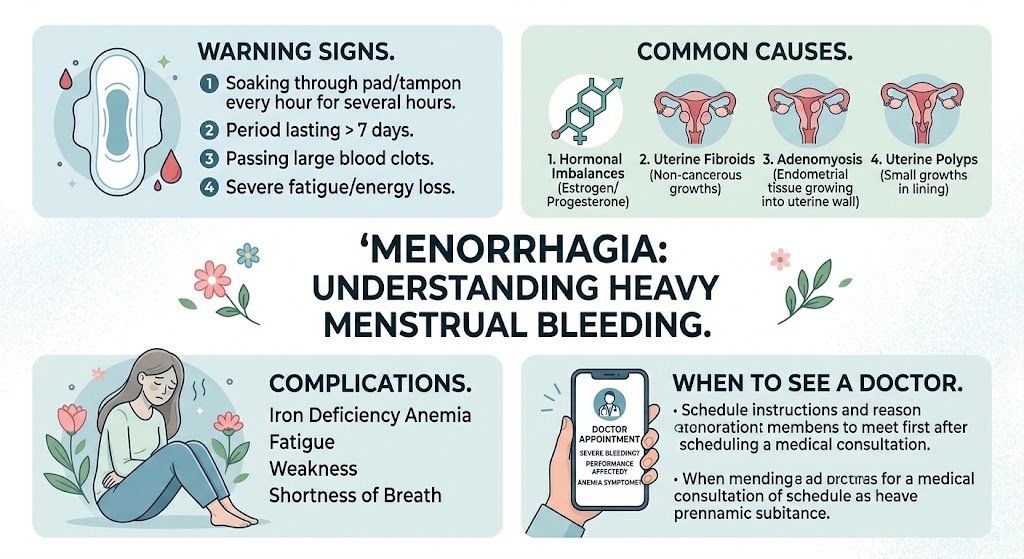
7 Warning Signs of Menorrhagia
- Soaking Through Pads or Tampons Every Hour
One of the most common signs is needing to change your pad or tampon every hour for several consecutive hours.
- Your Period Lasts More Than Seven Days
A typical menstrual period lasts between 2 and 7 days. Bleeding that continues beyond a week may indicate menorrhagia.
- Passing Large Blood Clots
Occasional small clots are common, but frequent large clots may suggest excessive menstrual blood loss.
- Needing Double Protection
Using both a tampon and a pad—or waking up at night to change menstrual products—can be a sign that your bleeding is heavier than normal.
- Fatigue and Low Energy
Heavy blood loss can deplete iron stores and increase the risk of iron deficiency anemia, leading to fatigue, weakness, dizziness, and shortness of breath.
- Severe Menstrual Cramps
While cramps are common, unusually painful periods alongside heavy bleeding may be associated with underlying conditions such as fibroids or adenomyosis.
- Your Period Affects Daily Life
If you avoid social activities, miss work, skip exercise, or feel anxious about leaving home because of your period, it’s worth discussing your symptoms with a healthcare provider.
What Causes Menorrhagia?
Several conditions can contribute to heavy menstrual bleeding.
Hormonal Imbalances
When estrogen and progesterone become imbalanced, the uterine lining may build up excessively and shed more heavily during menstruation.
Uterine Fibroids
Fibroids are non-cancerous growths in the uterus that commonly cause heavier and longer periods.
Adenomyosis
This condition occurs when endometrial tissue grows into the muscular wall of the uterus, often leading to heavy and painful periods.
Uterine Polyps
Small growths within the uterine lining can contribute to abnormal bleeding and prolonged periods.
Thyroid Disorders
Both underactive and overactive thyroid conditions can affect menstrual regularity and flow.
Bleeding Disorders
Inherited clotting disorders, such as von Willebrand disease, may be an overlooked cause of heavy periods.
How Is Menorrhagia Diagnosed?
Your healthcare provider may ask about:
- Length of your menstrual cycle
- Number of pads or tampons used
- Blood clot size
- Pregnancy history
- Current medications
Additional testing may include blood work, ultrasound imaging, or other evaluations depending on your symptoms.
Treatment Options for Menorrhagia
Treatment depends on the underlying cause and severity of bleeding.
Common options include:
- Iron supplementation for iron deficiency
- Nonsteroidal anti-inflammatory drugs (NSAIDs)
- Hormonal birth control
- Progesterone therapy
- Hormonal IUDs
- Tranexamic acid
- Surgical procedures when necessary
When Should You See a Doctor?
You should seek medical attention if:
- Your period lasts longer than seven days
- You soak through a pad or tampon every hour
- You experience severe fatigue or dizziness
- You pass large blood clots regularly
- Heavy bleeding interferes with your daily life
Early evaluation can help identify the cause and prevent complications such as anemia.
Heavy periods are common, but they should never be ignored when they begin affecting your health or daily activities. Menorrhagia can have many causes, from hormonal imbalances to uterine conditions such as fibroids and adenomyosis. The good news is that effective treatments are available, and getting the right diagnosis is the first step toward feeling better.
references
1- https://www.mayoclinic.org/diseases-conditions/menorrhagia/symptoms-causes/syc-20352829
2- https://my.clevelandclinic.org/health/diseases/17734-menorrhagia-heavy-menstrual-bleeding