
Many women are surprised when they start experiencing changes in their cycle, sleep, mood, or energy levels in their late 30s or 40s. These changes may be signs of perimenopause, the transitional stage leading up to menopause.
Perimenopause is a natural phase of life, but its symptoms can sometimes feel confusing or even alarming if you don’t know what to expect. Understanding the early signs can help you navigate this hormonal transition with greater confidence and seek support when needed.
In this article, we’ll explore the most common perimenopause symptoms, why they happen, and when to speak with a healthcare provider.
What Is Perimenopause?
Perimenopause is the period of time before menopause when the ovaries gradually begin producing less estrogen. During this transition, hormone levels can fluctuate significantly from month to month.
Perimenopause can begin several years before menopause and typically ends when a woman has gone 12 consecutive months without a menstrual period.
Although the average age of menopause is around 51, perimenopause often starts during the 40s and may begin earlier for some women.
11 Perimenopause Symptoms Every Woman Should Know
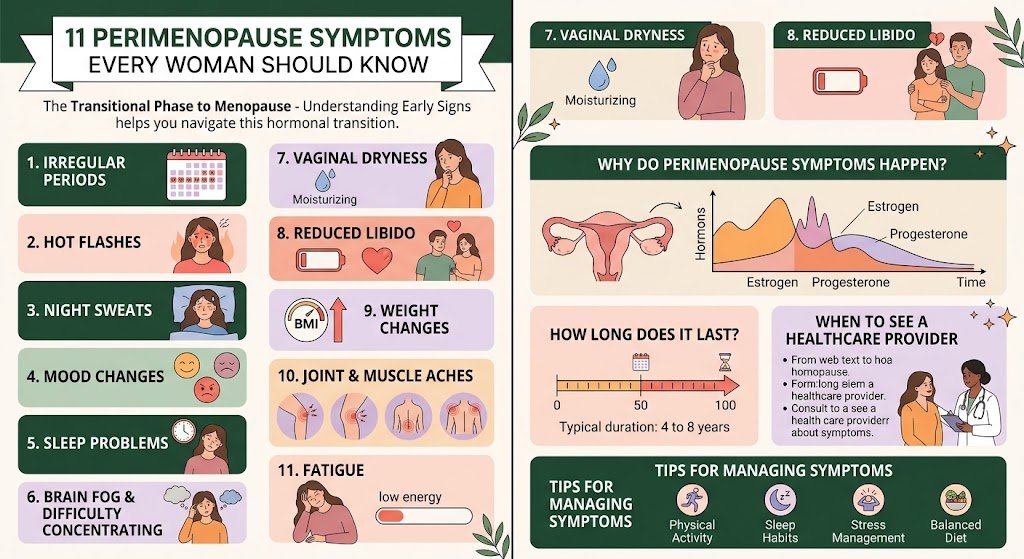
1- Irregular Periods
One of the earliest and most common signs of perimenopause is a change in menstrual cycles.
You may notice:
- Shorter cycles
- Longer cycles
- Missed periods
- Changes in menstrual flow
- Unpredictable bleeding patterns
2- Hot Flashes
Hot flashes are sudden feelings of heat that often affect the face, neck, and chest. They may last a few seconds or several minutes and can occur during the day or night.
3- Night Sweats
Night sweats are hot flashes that occur during sleep and may cause excessive sweating, disrupted sleep, and frequent awakenings.
4- Mood Changes
Hormonal fluctuations can contribute to:
- Irritability
- Increased emotional sensitivity
- Anxiety
- Mood swings
- Feelings of sadness
Not every woman experiences severe mood changes, but emotional symptoms are common during perimenopause.
5- Sleep Problems
Many women report difficulty sleeping during perimenopause.
This may include:
- Trouble falling asleep
- Frequent waking
- Early morning awakening
- Poor sleep quality
Sleep disturbances can occur even in women who do not experience night sweats.
6- Brain Fog and Difficulty Concentrating
Many women notice changes in memory and concentration.
You may find yourself:
- Forgetting appointments
- Losing your train of thought
- Having difficulty focusing on tasks
These symptoms are often temporary but can be frustrating.
Declining estrogen levels can affect vaginal tissues, leading to:
- Dryness
- Burning
- Irritation
- Discomfort during intimacy
This is a common symptom but one that many women hesitate to discuss.
8- Reduced Libido
Some women experience changes in sexual desire during perimenopause.
Contributing factors may include:
- Hormonal fluctuations
- Sleep disturbances
- Stress
- Vaginal discomfort
9- Weight Changes
Many women find it easier to gain weight during midlife.
Hormonal changes, age-related muscle loss, sleep disruption, and lifestyle factors can all play a role.
10- Joint and Muscle Aches
Perimenopause may be associated with increased joint stiffness, muscle soreness, and general body aches.
These symptoms can sometimes be mistaken for normal aging.
11- Fatigue
Persistent fatigue is a common complaint during perimenopause.
Contributing factors may include:
- Sleep disturbances
- Hormonal changes
- Stress
- Heavy menstrual bleeding
If fatigue is severe, other causes such as iron deficiency or thyroid disorders should also be considered.
Why Do Perimenopause Symptoms Happen?
The primary reason for perimenopause symptoms is fluctuating hormone levels.
Estrogen levels do not decline in a straight line. Instead, they may rise and fall unpredictably, which can affect many systems throughout the body, including:
- The reproductive system
- The brain
- Sleep regulation
- Temperature control
- Bone health
- Mood regulation
This hormonal variability explains why symptoms can change from month to month.
How Long Does Perimenopause Last?
Perimenopause can last anywhere from a few months to more than ten years, although many women experience symptoms for approximately four to eight years.
The duration varies significantly from person to person.
Tips for Managing Perimenopause Symptoms
While every woman’s experience is unique, many find relief through:
- Regular physical activity
- Consistent sleep habits
- Stress management techniques
- A balanced diet rich in protein and fiber
- Limiting smoking and excessive alcohol intake
- Staying hydrated
Small lifestyle changes can often make a meaningful difference in symptom management.
Final Thoughts
Perimenopause is a normal part of aging, but that doesn’t mean its symptoms should be ignored. From irregular periods and hot flashes to sleep difficulties and mood changes, understanding what to expect can make this transition feel less overwhelming.
If you’re experiencing symptoms that interfere with your daily life, speaking with a healthcare provider can help you explore treatment options and develop a plan that works for you.