
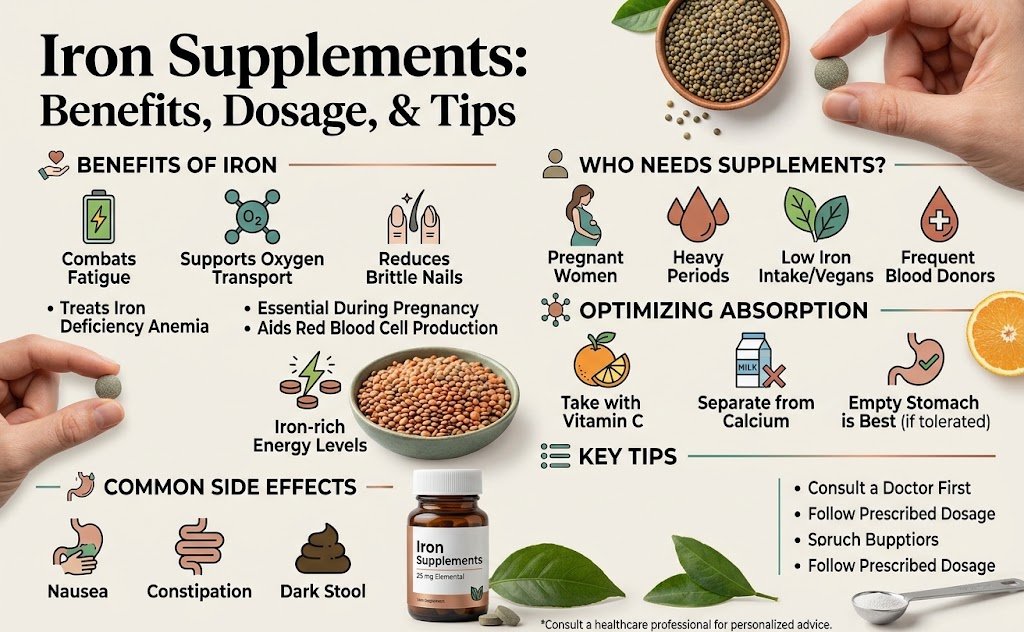
Iron is an essential mineral that helps your body produce hemoglobin, the protein in red blood cells responsible for carrying oxygen to your tissues. When your body does not have enough iron, you may develop iron deficiency, which can eventually lead to iron-deficiency anemia.
Iron supplements can help restore iron levels when dietary intake is insufficient or iron losses are high. However, they are not necessary for everyone, and taking too much iron can be harmful.
In this guide, we explain when iron supplements may be needed, how to take them, how to improve absorption, and what you should know about potential side effects.
What Are Iron Supplements?
Iron supplements are products that provide iron to help meet the body’s needs or treat iron deficiency.
They are available as tablets, capsules, liquids, and certain combination products. Some multivitamins also contain iron.
Common forms include:
- Ferrous sulfate: A widely used form of oral iron.
- Ferrous fumarate: Another commonly used form that provides a relatively high amount of elemental iron by weight.
- Ferrous gluconate: An alternative iron salt with a lower proportion of elemental iron by weight than ferrous sulfate.
- Iron bisglycinate: A chelated form used in some supplements.
These products differ in the amount of elemental iron they provide, absorption characteristics, and tolerability. No single formulation is best for everyone.
What Are the Benefits of Iron Supplements?
Iron supplementation is most beneficial when a person has an established iron deficiency or has been advised to take iron because of increased requirements.
- Treating Iron Deficiency Anemia
Iron-deficiency anemia occurs when iron stores become insufficient to support normal red blood cell production.
When iron deficiency is the cause, supplementation can help restore iron availability and improve hemoglobin levels over time.
However, anemia can also result from vitamin B12 or folate deficiency, chronic inflammation, inherited blood disorders, and other conditions. Iron should not be used as a treatment for anemia without identifying its cause.
- Restoring Iron Stores
Iron stores may become depleted before hemoglobin falls below the normal range. Ferritin is a blood marker commonly used to assess these stores.
When low ferritin indicates iron deficiency, a healthcare professional may recommend iron supplementation even if the hemoglobin level is still normal.
- Supporting Energy and Physical Function
Iron is essential for oxygen transport and normal muscle function. People with iron deficiency may experience fatigue, weakness, reduced exercise tolerance, or difficulty concentrating.
Correcting iron deficiency may improve these symptoms when low iron is responsible. However, taking iron will not necessarily improve energy in someone whose iron levels are adequate.
- Meeting Increased Needs During Pregnancy
Iron requirements increase during pregnancy because the mother’s blood volume expands and the developing baby needs iron.
Pregnant women should follow their prenatal care provider’s recommendations on supplementation, screening, and dose. The appropriate approach depends on local guidelines, laboratory results, and individual risk factors.
Who May Need Iron Supplements?
Iron supplements may be recommended for people with confirmed iron deficiency or increased iron requirements.
Groups who may be more likely to develop deficiency include:
- Women with heavy menstrual bleeding
- Pregnant women
- People with low dietary iron intake
- People who donate blood frequently
- Individuals with certain gastrointestinal conditions that affect absorption
- People with ongoing blood loss
The presence of risk factors does not automatically mean you need a supplement. Blood tests and a clinical assessment can help determine whether supplementation is appropriate.
What Are the Signs of Iron Deficiency?
Possible symptoms include:
- Persistent fatigue or weakness
- Pale skin
- Shortness of breath during activity
- Dizziness or lightheadedness
- Headaches
- Difficulty concentrating
- Reduced exercise tolerance
- Brittle nails or hair shedding in some people
These symptoms are not specific to iron deficiency and may have other causes.
A healthcare professional may recommend a complete blood count (CBC), ferritin, and other iron studies based on your symptoms and medical history.
How to Take Iron Supplements for Better Absorption
The best way to take iron depends on the product, your prescribed dose, and how well you tolerate it.
Take Iron on an Empty Stomach if You Can Tolerate It
Iron is generally absorbed better on an empty stomach. However, taking it without food may cause nausea or stomach discomfort.
If this happens, ask your healthcare professional or pharmacist whether taking your particular supplement with a small amount of food is appropriate.
Do not stop a prescribed treatment simply because you experience mild digestive side effects; discuss adjustments with your healthcare professional.
Consider Vitamin C and Iron Absorption
Vitamin C can improve the absorption of non-heme iron, the type found in plant foods and many supplements.
You can obtain vitamin C from foods such as oranges, kiwi, strawberries, bell peppers, and tomatoes.
A separate high-dose vitamin C supplement is not automatically necessary. Follow professional advice if you are considering adding one.
Separate Iron From Calcium Supplements
Calcium may reduce iron absorption when taken at the same time. If you use both supplements, consider taking them at different times according to your pharmacist’s or healthcare professional’s advice.
Be Careful With Tea and Coffee
Compounds called polyphenols in tea and coffee can reduce the absorption of non-heme iron when consumed together with an iron-containing meal or supplement.
Avoid taking your iron dose with tea or coffee. Your healthcare professional can advise on suitable timing based on your routine and formulation.
Check for Medication Interactions
Iron supplements can interact with some medicines. For example, iron can reduce the absorption of levothyroxine, a medicine used to treat hypothyroidism.
The US National Institutes of Health advises separating iron and levothyroxine by at least four hours. Other medicines may require different timing or additional precautions.
Always check with your pharmacist if you take prescription medicines regularly.
What Is the Recommended Dosage of Iron Supplements?
There is no single iron supplement dose suitable for everyone. The appropriate amount depends on whether you are preventing deficiency, treating confirmed iron deficiency, or meeting pregnancy-related requirements.
For reference, the recommended daily dietary allowance for adults aged 19–50 is 18 mg for women and 8 mg for men. The recommended allowance during pregnancy is 27 mg per day.
These figures represent total daily dietary requirements, not a universal treatment dose for iron deficiency anemia.
Treatment regimens may use different amounts of elemental iron based on laboratory results, tolerance, the cause of deficiency, and the response to treatment.
When choosing a supplement, look for the amount of elemental iron on the label rather than relying only on the total weight of the iron compound.
Do not increase your dose or combine multiple iron-containing products without professional guidance.
Iron Supplement Side Effects
Iron supplements can cause digestive side effects, especially at higher doses.
Common side effects include:
- Nausea
- Constipation
- Abdominal discomfort
- Vomiting
- Diarrhea
- Dark or black-colored stools
Dark stools can occur with oral iron. However, black, tarry stools accompanied by weakness, abdominal pain, dizziness, or other concerning symptoms should not automatically be attributed to the supplement; seek medical assessment.
How Can You Reduce Side Effects?
If iron causes discomfort, these strategies may help:
- Ask whether taking it with a small amount of food is appropriate.
- Discuss a different formulation with your pharmacist or healthcare provider.
- Ask whether a different dosing schedule would be suitable.
- Maintain adequate fluid intake and dietary fiber if constipation occurs.
- Avoid increasing the dose without guidance.
If oral iron is ineffective, poorly tolerated, or unsuitable for a particular medical situation, a healthcare professional may consider other treatment options, including intravenous iron when indicated.
How Long Do Iron Supplements Take to Work?
The response depends on the severity of deficiency, the cause, the formulation, and adherence to treatment.
In people with iron-deficiency anemia, hemoglobin may begin to improve over several weeks. Replenishing iron stores can take longer, and treatment may continue after hemoglobin normalizes.
Your healthcare professional may repeat blood tests to assess the response and decide how long treatment should continue.
If your iron levels do not improve as expected, the next step is not always to increase the dose. Possible explanations include ongoing blood loss, poor absorption, an incorrect diagnosis, interactions, or difficulty tolerating the treatment.
Can You Get Enough Iron From Food?
Many people can meet their daily iron needs through a balanced diet, although dietary intake alone may not correct established iron deficiency.
Foods Rich in Heme Iron
Heme iron is found in animal foods and is generally more readily absorbed than non-heme iron.
Examples include:
- Lean beef
- Poultry
- Seafood
Foods Rich in Non-Heme Iron
Non-heme iron is found in plant foods and iron-fortified products.
Examples include:
- Lentils and beans
- Tofu
- Spinach and other leafy vegetables
- Iron-fortified cereals and grains
- Nuts and seeds
Pairing plant-based iron sources with vitamin C-rich foods can improve non-heme iron absorption.
If you have confirmed iron deficiency, dietary changes may support treatment but may not be enough on their own.
Can Taking Too Much Iron Be Harmful?
Yes. Excess iron can be toxic, and unnecessary supplementation can cause harm.
People with certain conditions, including hereditary hemochromatosis, may be particularly vulnerable to iron overload. Iron should not be taken routinely without a clear reason.
Iron supplements are also a major poisoning risk for young children if accidentally swallowed. Keep all iron-containing products securely stored and out of children’s reach.
If a child may have swallowed iron tablets, seek urgent medical advice immediately, even if the child initially appears well.

SiderAL Forte Sucrosomial Iron Supplement for Women
✓ Increase Levels without Side Effects, Gentle on Stomach, 7x Higher Absorption for Anemia & Energy
As an Amazon Associate I earn from qualifying purchases.
Frequently Asked Questions
What is the best time to take iron supplements?
Iron is generally absorbed better on an empty stomach, but taking it with food may improve tolerability. The best timing depends on the formulation, side effects, and other medicines or supplements you use.
Can I take iron supplements every day?
Some treatment plans use daily iron, while others use different schedules depending on the clinical situation. Follow the regimen recommended by your healthcare professional rather than choosing a schedule independently.
Should I take iron with vitamin C?
Vitamin C can improve the absorption of non-heme iron, but an additional vitamin C supplement is not always necessary. Vitamin C-rich foods may be sufficient for many people.
Do iron supplements cause constipation?
Yes. Constipation is a common side effect, although some people experience nausea, abdominal discomfort, or diarrhea instead. A healthcare professional can help you choose a suitable formulation or dosing schedule.
Can I take iron and magnesium together?
Evidence about the effect of magnesium supplements on iron absorption is less clear than the evidence for calcium. If you take multiple mineral supplements or prescription medicines, ask your pharmacist about appropriate timing rather than assuming all products should be taken together.
Can iron supplements help with hair loss?
Iron deficiency may contribute to hair shedding in some people. Supplementation is most likely to help when iron deficiency is present; it is not a proven treatment for every type of hair loss.
How do I know if my iron levels are low?
A CBC and ferritin test are commonly used, sometimes alongside additional iron studies. Your symptoms alone cannot reliably confirm iron deficiency.
Final Thoughts
Iron supplements can be valuable for treating iron deficiency and iron-deficiency anemia when used appropriately. Choosing the right product, taking it correctly, monitoring your response, and addressing the cause of deficiency are all important parts of treatment.
Because excessive iron can be harmful, it is best to base supplementation on your needs and professional guidance rather than taking high-dose iron routinely.