
Having irregular periods can make trying to conceive feel confusing and stressful. You may find yourself wondering whether you’re ovulating, when your fertile window occurs, or whether irregular menstrual cycles mean you cannot get pregnant.
The good news is that yes, you can get pregnant with irregular periods. However, irregular menstrual cycles may make conception more challenging because ovulation can be unpredictable or may not happen regularly.
Understanding why your periods are irregular, how ovulation works, and when to seek medical advice can help you improve your chances of getting pregnant.
In this article, we’ll explain everything you need to know about irregular periods and fertility, including common causes, ways to track ovulation, and practical tips for increasing your chances of conception.
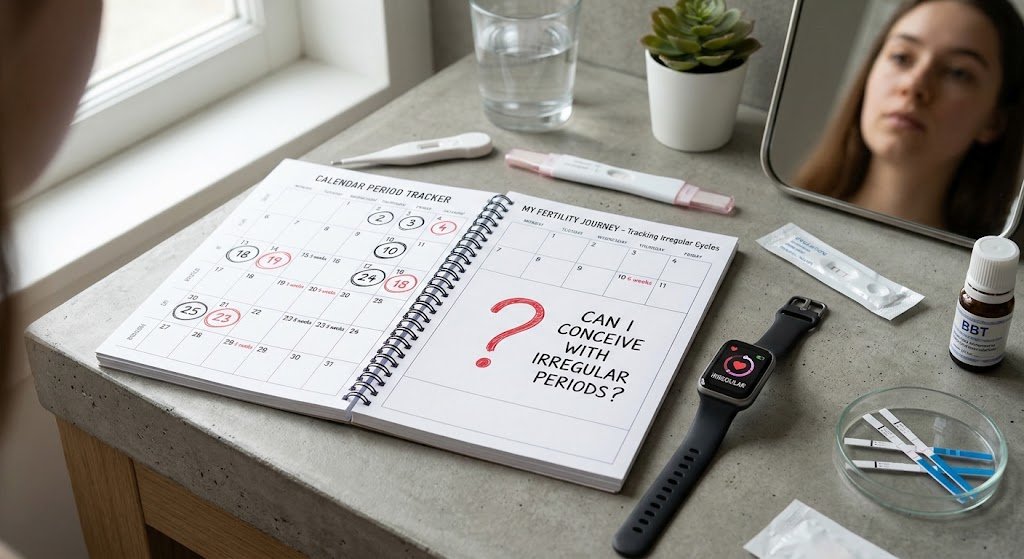
Can You Get Pregnant With Irregular Periods?
Yes! Having irregular periods does not automatically mean you are infertile.
Pregnancy is possible as long as ovulation occurs and the other factors necessary for conception are present, including healthy sperm, functioning fallopian tubes, and a healthy reproductive system.
However, women with irregular periods may experience difficulties conceiving for two main reasons:
- Unpredictable ovulation: You may ovulate earlier or later than expected, making it difficult to identify your fertile window.
- Infrequent or absent ovulation: Some women with irregular menstrual cycles do not release an egg every month, which can reduce their chances of pregnancy.
It’s important to understand that irregular periods are sometimes a sign of an underlying hormonal or reproductive condition that may affect fertility.
The good news is that many causes of irregular periods are treatable, and pregnancy may still be possible with appropriate management.
How Do Irregular Periods Affect Ovulation and Fertility?
To understand the relationship between irregular periods and pregnancy, you first need to understand ovulation.
Ovulation is the process in which one of your ovaries releases a mature egg. This egg can be fertilized by sperm, resulting in pregnancy.
In a typical menstrual cycle, ovulation occurs approximately 10–16 days before the next period, although the timing varies between women.
When your periods are irregular, ovulation may become unpredictable.
For example:
- You may ovulate later than usual.
- You may ovulate earlier than expected.
- You may skip ovulation in some menstrual cycles.
- You may experience long gaps between ovulatory cycles.
If you ovulate less frequently, you have fewer opportunities to conceive throughout the year.
However, irregular periods do not necessarily mean that you are not ovulating. Some women with longer or variable cycles still ovulate naturally.
What Causes Irregular Periods That May Affect Fertility?
Several conditions and lifestyle factors can contribute to irregular menstrual cycles. Some may interfere with ovulation and make pregnancy more difficult.
Here are some of the most common causes:
Polycystic Ovary Syndrome (PCOS)
PCOS is one of the most common causes of irregular periods and ovulatory dysfunction.
Women with PCOS may experience hormonal imbalances that interfere with the normal development and release of mature eggs.
Common symptoms include:
- Irregular or missed periods.
- Excess facial or body hair.
- Acne and oily skin.
- Difficulty losing weight in some women.
- Insulin resistance in some cases.
Not every woman with PCOS experiences all these symptoms.
Although PCOS can affect fertility, many women with this condition can conceive naturally or with medical treatment.
Thyroid Disorders
Your thyroid gland plays an important role in regulating metabolism and reproductive hormones.
Both hypothyroidism (underactive thyroid) and hyperthyroidism (overactive thyroid) can interfere with menstrual regularity and ovulation.
Symptoms may include unexplained weight changes, fatigue, changes in hair texture, and menstrual irregularities.
Treating an underlying thyroid disorder may help restore more regular menstrual cycles.
High Prolactin Levels
Prolactin is a hormone primarily responsible for stimulating breast milk production.
However, elevated prolactin levels can interfere with the hormones responsible for ovulation, potentially causing irregular periods or absent menstruation.
Some women may also experience unexpected breast milk production, even when they are not breastfeeding.
Significant Weight Changes
Rapid weight gain or weight loss can affect the hormonal signals between the brain and ovaries.
This may interfere with normal ovulation and lead to irregular periods.
Both excess body weight and being significantly underweight can contribute to menstrual irregularities.
Stress and Excessive Exercise
Chronic stress and excessive physical activity may affect the hypothalamus, the part of the brain involved in regulating reproductive hormones.
In some women, this can lead to delayed ovulation, irregular periods, or even missed periods.
Maintaining adequate nutrition, getting enough sleep, and avoiding excessive exercise may help support normal hormonal function.
How Can You Tell If You’re Ovulating With Irregular Periods?
If your menstrual cycles are unpredictable, identifying ovulation can be challenging.
However, there are several ways to monitor your ovulation and better understand your cycle.
- Monitor Changes in Cervical Mucus
Cervical mucus changes throughout your menstrual cycle in response to hormonal fluctuations.
As ovulation approaches, estrogen levels increase, causing cervical mucus to become:
- Clear and transparent.
- Stretchy, similar to raw egg whites.
- Slippery and wet.
This type of cervical mucus helps sperm move through the reproductive tract and is commonly associated with the fertile window.
- Use Ovulation Predictor Kits (OPKs)
Ovulation predictor kits detect the luteinizing hormone (LH) surge in urine.
This hormone typically rises approximately 24–36 hours before ovulation.
A positive result suggests that ovulation may be approaching, although it does not guarantee that an egg will actually be released.
Women with PCOS may experience elevated or fluctuating LH levels, which can make these tests less reliable.
Basal body temperature is your body’s resting temperature, measured immediately after waking up.
After ovulation, progesterone causes a small increase in basal body temperature.
Tracking this temperature daily may help you identify patterns and confirm that ovulation has likely occurred.
However, this method is more useful for identifying ovulation retrospectively than predicting the fertile window.
- Blood Tests and Ultrasound
Your healthcare provider may recommend certain tests to assess whether ovulation is occurring.
These may include:
- Serum progesterone: A blood test used to help confirm recent ovulation. It should be timed according to the expected next period, rather than automatically performed on day 21.
- Transvaginal ultrasound: May help monitor follicle development and assess whether ovulation is occurring.
- Hormonal blood tests: Depending on your symptoms, your doctor may check TSH, prolactin, FSH, LH, and other relevant hormones.
The appropriate tests depend on your menstrual history and suspected underlying cause.
What Is the Best Time to Get Pregnant With Irregular Periods?
One of the biggest challenges of having irregular periods is knowing when you are most fertile.
For women with regular cycles, ovulation can sometimes be estimated using their usual cycle length.
However, this approach is less reliable when cycles are irregular.
The fertile window is approximately six days: the five days before ovulation and the day of ovulation itself.
This is because sperm can survive in the female reproductive tract for several days, while the egg usually remains viable for approximately 12–24 hours after ovulation.
Here are some practical ways to improve your chances:
Have intercourse every 2–3 days throughout your menstrual cycle.
This is one of the simplest approaches when ovulation is unpredictable. It helps ensure that sperm are available when ovulation occurs without needing to identify an exact ovulation date.
Monitor your cervical mucus.
Pay attention to clear, slippery, stretchy discharge, which may indicate that your fertile window is approaching.
Use ovulation tracking methods.
OPKs and other fertility tracking methods may help identify hormonal changes associated with ovulation, although their reliability varies depending on the underlying cause of irregular cycles.
Most importantly, avoid relying on calendar apps alone to predict ovulation when your periods are irregular.
How Can You Increase Your Chances of Getting Pregnant With Irregular Periods?
Although you cannot always control your menstrual cycle, certain steps can help support reproductive health and improve your chances of conception.
Identify and Treat the Underlying Cause
This is one of the most important steps.
If irregular periods are caused by PCOS, thyroid dysfunction, elevated prolactin, or another hormonal condition, treating the underlying problem may help improve ovulation.
Your doctor can recommend an appropriate treatment based on your diagnosis and pregnancy goals.
Maintain a Healthy Weight
If you are overweight or have insulin resistance associated with PCOS, gradual and sustainable weight loss may improve hormonal balance and ovulatory function.
Avoid extreme dieting or rapid weight loss, as these can negatively affect your menstrual cycle.
Follow a Balanced Diet
A nutritious diet supports overall reproductive health.
Try to include:
- Protein-rich foods such as eggs, fish, chicken, and legumes.
- Healthy fats from nuts, olive oil, and avocado.
- Whole grains and fiber-rich vegetables.
- Fruits containing essential vitamins and antioxidants.
There is no single fertility diet proven to guarantee pregnancy, but maintaining good nutritional status is important.
Take Folic Acid Before Pregnancy
Women planning to conceive are generally advised to take 400 micrograms of folic acid daily, starting at least one month before pregnancy.
Folic acid helps reduce the risk of neural tube defects during early fetal development.
Some women may need a higher dose based on their medical history, so discuss this with your healthcare provider.
Manage Stress and Get Enough Sleep
Chronic stress and insufficient sleep may contribute to hormonal disturbances in some women.
Try to maintain a consistent sleep schedule, engage in moderate physical activity, and find healthy ways to manage stress.
When Should You See a Doctor About Irregular Periods and Fertility?
You do not need to wait until you have been trying to conceive for a year before seeking medical advice if your periods are irregular.
In fact, irregular menstrual cycles are a reason to consider an earlier fertility evaluation because they may indicate an ovulation problem.
Consider scheduling an appointment with your gynecologist if:
- Your menstrual cycles are consistently longer than 35 days.
- You frequently skip periods.
- You have not had a period for three months or longer.
- You experience symptoms such as excessive facial hair, persistent acne, or unexplained weight changes.
- You are trying to conceive but cannot identify your ovulation pattern.
A fertility evaluation may include an assessment of ovulation, reproductive hormones, uterine and fallopian tube health, and your partner’s sperm health when appropriate.
For women without known fertility problems, evaluation is generally recommended after 12 months of trying if younger than 35, or after 6 months if aged 35 or older.
However, if you have irregular periods or a suspected condition affecting ovulation, evaluation should not be delayed until these time limits have passed.
Frequently Asked Questions (FAQs)
- Can I get pregnant naturally with irregular periods?
Yes. Many women with irregular periods conceive naturally. The chances depend on whether ovulation occurs and whether other reproductive factors are normal.
- Does having irregular periods mean I am infertile?
No. Irregular periods do not automatically mean infertility. However, they may indicate irregular ovulation, which can make conception more challenging.
- Can I get pregnant if I only have 3 or 4 periods a year?
Yes, pregnancy is still possible if ovulation occurs occasionally. However, having only three or four periods annually may indicate infrequent ovulation and requires medical evaluation.
- Can I ovulate without having regular periods?
Yes. Women with irregular menstrual cycles may still ovulate, although the timing can vary considerably from one cycle to another.
- Can PCOS cause irregular periods and difficulty getting pregnant?
Yes. PCOS can interfere with normal ovulation and cause irregular or absent periods. However, many women with PCOS successfully become pregnant, sometimes with the help of fertility treatment.
- What is the fastest way to get pregnant with irregular periods?
There is no guaranteed shortcut. Identifying the underlying cause, monitoring ovulation, having intercourse every 2–3 days, and seeking appropriate medical advice can help improve your chances.
Final Thoughts
Having irregular periods does not mean you cannot get pregnant. However, irregular cycles can make it more difficult to predict ovulation and may sometimes indicate an underlying hormonal condition.
The most important step is to understand why your periods are irregular and whether you are ovulating regularly.
With the right evaluation, lifestyle adjustments, and medical treatment when needed, many women with irregular menstrual cycles can achieve a healthy pregnancy.
If you are planning to conceive, do not let irregular periods discourage you. Understanding your cycle is the first step toward making informed decisions about your fertility.
⸻